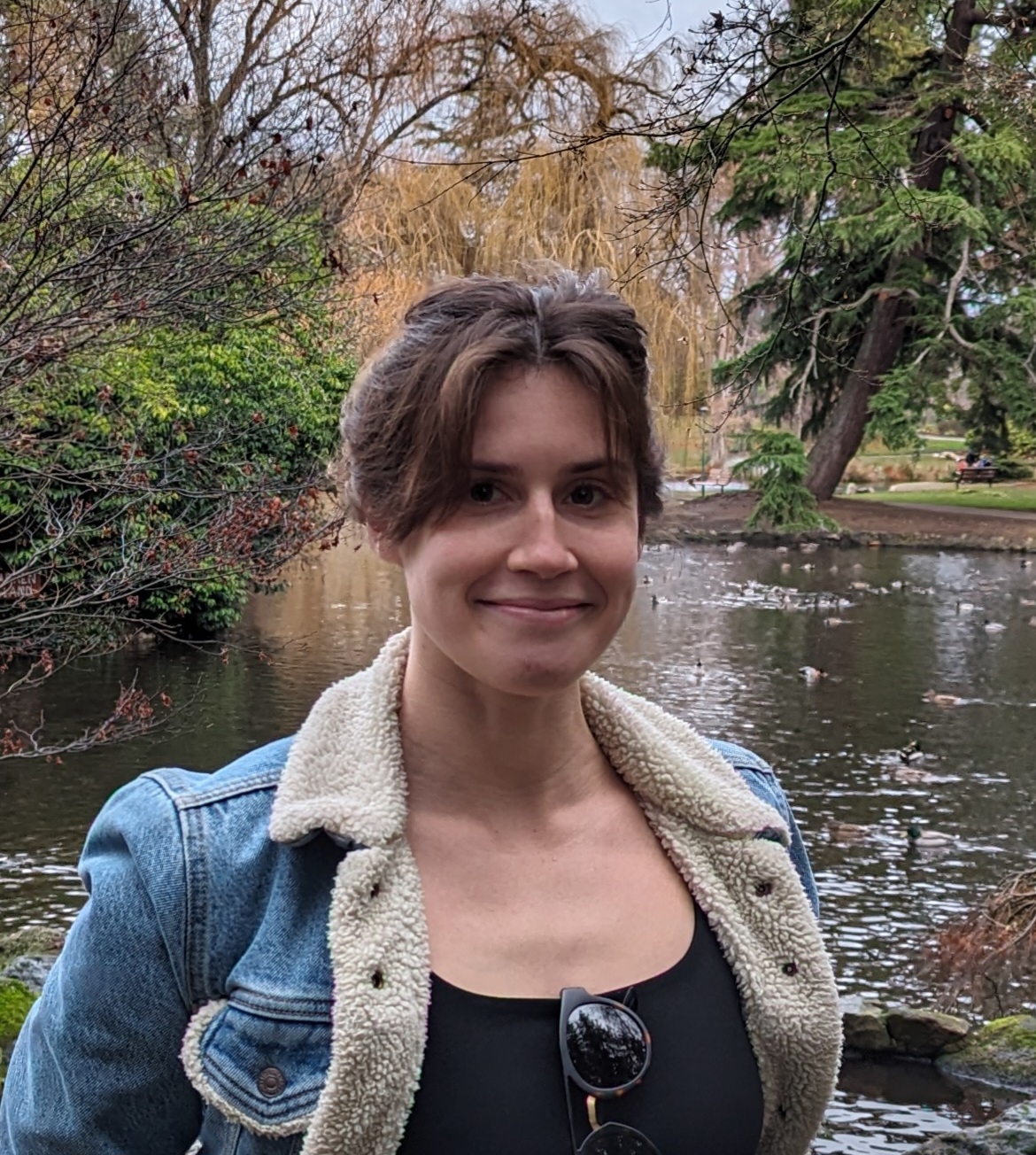
Darian Philbrick
Williams Lake First Nation

Every month, FireSmart BC highlights someone making a real difference in wildfire risk reduction in their community. Know someone who deserves recognition? Submit their name below.

Williams Lake First Nation
What is your name and current role?
My name is Darian Philbrick, and I am the FireSmart Technician for Williams Lake First Nation.
Where are you based, and what community or geographical area do you support?
I am based in the beautiful northern Secwepemcúl’ecw (Cariboo B.C.), and I support the Secwépemc nation (Williams Lake First Nation)
How long have you been involved in FireSmart?
I have been involved in FireSmart for about a year. Although it hasn’t been long, I have learned an overwhelming amount in that time.
What inspired you to get involved in FireSmart work?
Growing up in British Columbia, I have seen firsthand the impacts wildfires can have on families and communities. I wanted to be part of something that helps protect people before disasters happen. Being able to make a positive difference in my own community and help reduce wildfire risk is incredibly rewarding.
What are the biggest opportunities or challenges you face in your role?
One of the biggest opportunities is working alongside my community to help reduce wildfire risk and build resilience together. One of the biggest challenges is balancing the amount of work that needs to be done with the time and resources available. While my position is currently funded for two years, there is still a great deal of work ahead to build a more wildfire-resilient community.
What accomplishment or success are you most proud of?
What I’m most proud of isn’t a single project—it’s seeing our entire community come together to make wildfire resilience a shared responsibility. FireSmart is truly a team effort, and I feel fortunate to work alongside so many dedicated people at Williams Lake First Nation.
Our Housing Department has done an incredible job incorporating FireSmart principles into renovations and rebuilding to higher wildfire-resilient standards. Our Forestry Department has completed important fuel mitigation projects that have significantly reduced wildfire hazards around our community. The Lands Department has been a great partner in planning and supporting FireSmart initiatives, while our Grounds Team has taken on our vegetation management program and our Operations & Maintenance team continues to maintain grass and green spaces to help reduce wildfire risk.
Most importantly, I’ve been encouraged by the number of community members who have embraced FireSmart by making improvements to their own properties. Seeing everyone—from departments to homeowners—working toward the same goal is what I’m most proud of. It shows that building a more wildfire-resilient community takes all of us, and together we’re making a real difference.
What has been your favourite FireSmart project, initiative, or event you’ve worked on?
My favourite project has been developing and implementing our Vegetation Management Plan. It’s rewarding to see the direct impact of reducing wildfire hazards while working alongside our grounds team to make Williams Lake First Nation more resilient.
What is one thing you wish more people knew about FireSmart?
I wish more people knew that FireSmart is a shared responsibility. Whether it’s homeowners, community departments, or local organizations, everyone has a role to play. When we all do our part, we build a safer and more resilient community together.
What advice would you give to others working to build wildfire resilience in their communities?
Be patient and stay consistent. Building a FireSmart community takes time, but every conversation, every project, and every small improvement help create lasting change.
Is there anything else you’d like to share?
I would like to thank everyone at Williams Lake First Nation who has supported our FireSmart program. A special thank you to my manager, Paul, and our Emergency Management team for their guidance, encouragement, and continued support. I’d also like to recognize all our departments and community members who have embraced FireSmart and helped make wildfire resilience a shared responsibility. This recognition reflects the hard work of our entire community, and I’m grateful to be part of such an incredible team that’s committed to building a safer, more wildfire-resilient future.
What is your name and current role?
My name is Darian Philbrick, and I am the FireSmart Technician for Williams Lake First Nation.
Where are you based, and what community or geographical area do you support?
I am based in the beautiful northern Secwepemcúl’ecw (Cariboo B.C.), and I support the Secwépemc nation (Williams Lake First Nation)
How long have you been involved in FireSmart?
I have been involved in FireSmart for about a year. Although it hasn’t been long, I have learned an overwhelming amount in that time.
What inspired you to get involved in FireSmart work?
Growing up in British Columbia, I have seen firsthand the impacts wildfires can have on families and communities. I wanted to be part of something that helps protect people before disasters happen. Being able to make a positive difference in my own community and help reduce wildfire risk is incredibly rewarding.
What are the biggest opportunities or challenges you face in your role?
One of the biggest opportunities is working alongside my community to help reduce wildfire risk and build resilience together. One of the biggest challenges is balancing the amount of work that needs to be done with the time and resources available. While my position is currently funded for two years, there is still a great deal of work ahead to build a more wildfire-resilient community.
What accomplishment or success are you most proud of?
What I’m most proud of isn’t a single project—it’s seeing our entire community come together to make wildfire resilience a shared responsibility. FireSmart is truly a team effort, and I feel fortunate to work alongside so many dedicated people at Williams Lake First Nation.
Our Housing Department has done an incredible job incorporating FireSmart principles into renovations and rebuilding to higher wildfire-resilient standards. Our Forestry Department has completed important fuel mitigation projects that have significantly reduced wildfire hazards around our community. The Lands Department has been a great partner in planning and supporting FireSmart initiatives, while our Grounds Team has taken on our vegetation management program and our Operations & Maintenance team continues to maintain grass and green spaces to help reduce wildfire risk.
Most importantly, I’ve been encouraged by the number of community members who have embraced FireSmart by making improvements to their own properties. Seeing everyone—from departments to homeowners—working toward the same goal is what I’m most proud of. It shows that building a more wildfire-resilient community takes all of us, and together we’re making a real difference.
What has been your favourite FireSmart project, initiative, or event you’ve worked on?
My favourite project has been developing and implementing our Vegetation Management Plan. It’s rewarding to see the direct impact of reducing wildfire hazards while working alongside our grounds team to make Williams Lake First Nation more resilient.
What is one thing you wish more people knew about FireSmart?
I wish more people knew that FireSmart is a shared responsibility. Whether it’s homeowners, community departments, or local organizations, everyone has a role to play. When we all do our part, we build a safer and more resilient community together.
What advice would you give to others working to build wildfire resilience in their communities?
Be patient and stay consistent. Building a FireSmart community takes time, but every conversation, every project, and every small improvement help create lasting change.
Is there anything else you’d like to share?
I would like to thank everyone at Williams Lake First Nation who has supported our FireSmart program. A special thank you to my manager, Paul, and our Emergency Management team for their guidance, encouragement, and continued support. I’d also like to recognize all our departments and community members who have embraced FireSmart and helped make wildfire resilience a shared responsibility. This recognition reflects the hard work of our entire community, and I’m grateful to be part of such an incredible team that’s committed to building a safer, more wildfire-resilient future.
1. Where do you live and what geographical area do you cover?
I live in Edgewater BC, and I cover areas F&G of the Regional District of the East Kootenay.
2. How long have you been an LFR?
I have been an LFR for one year.
3. What made you decide that you wanted to be an LFR and support homeowners and neighbourhoods on how to become FireSmart?
When I joined my local volunteer fire department several years ago, I knew right away that I had to become more involved with all things fire related. In 2024, I attended the Wildfire Resiliency Summit in Prince George with my Fire Department and the scientific, evidence-based approach that FireSmart takes to learning to live with and manage fire really appealed to me. So, when the opportunity arose to become an LFR in my area I chose to change careers and pursue working in FireSmart.
4. What are your 2 biggest challenges as an LFR?
I find it challenging to measure success sometimes, in my previous career it was very easy to look back at the end of the day and see exactly what had been done. In this kind of work, it’s sometimes hard to know which conversations or events have spurred someone to act. Managing peoples’ expectations of what I can provide, I constantly field questions from people trying to force their neighbours to do some FireSmarting, or why the government isn’t managing a specific portion of forest differently.
5. What are some of your successes with the FireSmart program?
Bringing the education program to schools in my area, as well as bringing FireSmart education to unexpected areas such as music festivals.
6. What has been your favourite project/event you have done with your local FireSmart Program?
My favourite project/event has been getting into the schools to teach local kids about FireSmart..
7. What advice would you give to other LFRs?
Be driven, but patient, as much as I want to solve the wildfire puzzle today (Right now!) we are up against a problem that will take many years and many people to mitigate.
1) Tell us about yourself, Steve.
I am the FireSmart Program Coordinator serving the small island community of Bowen Island. Bowen, located in Howe Sound, has a year-round population of approximately 5,000 people and encompasses approximately 64 square kilometers. I am a Lieutenant with Bowen Island Fire Rescue and bring 17 years of Structural Firefighting experience, the past 7 years on Bowen and 10 years prior to that with Squamish Fire Rescue. I started my role as Program Coordinator in April of 2025.
2) What made you decide that you wanted to become a WMS and support homeowners on how to become FireSmart?
After seeing the social, environmental, and financial impacts of WUI fires on large and small communities throughout BC I quickly identified with the problem and saw the need to build and grow the FireSmart program here at home.
3) What would you say are your 2 biggest challenges as a WMS?
Educating folks and changing people’s mindsets and the way they view fire on the landscape and bringing forth the concept of wildfire resiliency and how we incorporate that into development planning at a municipal level.
4) What are some of your successes with the FireSmart program?
The day I knew we were getting somewhere as a community is the day I showed up at a residence to conduct an HIZ Assessment and was met in the driveway by the owner holding a piece of paper (self assessment). The following 45 mins was the owner leading me around the property talking to me about all the valuable FireSmart work they had done to their home and their 3 ignition zones. It was clear the FireSmart program was gaining traction and we were transitioning from LFR’s doing all the talking to neighbours understanding and talking to each other sharing the information.
5) What has been your favourite project/event you have done with your local FireSmart Program?
Hands down the incorporation of our free greenwaste disposal bin located at the Firehall. Islanders can responsibly dispose of their greenwaste after conducting mitigation work on their property at no cost. To take it a step further we’ve allowed our commercial landscape companies to utilize the bin in exchange for completing the online Landscape Professionals Course and signing the letter of agreement.
6) What advice would you give to other WMSs?
Just to recognize that some of these changes won’t occur overnight they’ll come about more like a slow burn and to maintain the focus and keep moving forward.
7) What is your favourite aspect of the FireSmart BC website?
I’m a huge fan of the graphics and the overall layout. I think it’s accessible, relatable, and presented in a way that generates interest and promotes folks diving deeper into the subject of building wildfire resiliency.
1. Where do you live and what geographical area do you cover?
I am based in Pemberton BC, with Pemberton Fire Rescue supporting the Village of Pemberton.
2. How long have you been an LFR?
I have been an LFR for three years.
3. What made you decide that you wanted to be an LFR and support homeowners and neighbourhoods on how to become FireSmart?
As a POC firefighter for 5 years, including time spent on deployments to wildfire-impacted communities, I’ve seen firsthand the effects wildfires can have. This role is about shifting the focus to prevention, supporting homeowners in making practical changes that reduce risk well in advance.
4. What are your 2 biggest challenges as an LFR?
One of the biggest challenges is helping homeowners understand their level of risk, especially when wildfire isn’t top of mind. Another challenge is turning awareness into action, encouraging people to follow through with FireSmart practices after initial engagement.
5. What are some of your successes with the FireSmart program?
Some of the biggest successes have been increasing community awareness, completing home and neighbourhood assessments, and seeing property owners take real action, whether that’s cleaning up vegetation, improving defensible space, or working together as a neighbourhood to reduce risk.
6. What has been your favourite project/event you have done with your local FireSmart Program?
One of my favourite experiences has been working directly with residents during community events and home assessments. It’s always rewarding to have those one-on-one conversations and see people feel more confident about protecting their homes.
7. What advice would you give to other LFRs?
Focus on building relationships and meeting people where they’re at. Keep the message practical and achievable, small changes can make a big difference. Consistency and community engagement go a long way.
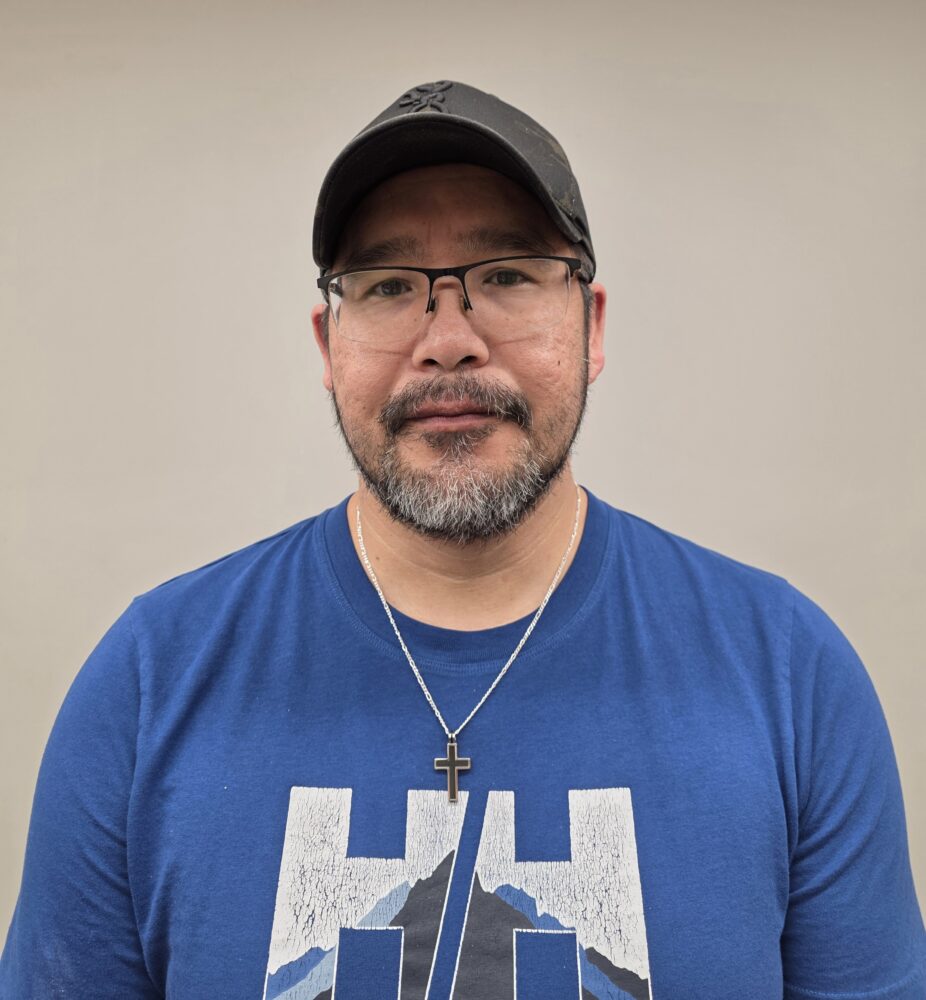
1) Where do you live and what geographical area do you cover? Tachie Reserve located 45km north of Fort St James.
2) How long have you been an LFR? 3 years full time, got trained originally in 2019 through FNESS.
3) What made you decide that you wanted to be an LFR and support homeowners and neighbourhoods on how to become FireSmart? I wanted to educate people on making their homes more resilient to wildfires and also it was similar to my Fire Chief Position. When we took the training in 2019 it was hands on and in the field and was interested since.
4) What are your 2 biggest challenges as an LFR? Doing education presentations in front of the community. Finding a crew that can do the mitigation work each year effectively.
5) What are some of your successes with the FireSmart program? Community members and homeowners doing their part at home and understanding the importance of the program and their roles and responsibilities.
6) What has been your favourite project/event you have done with your local FireSmart Program? Going into the Elementary School, kids are always so enthusiastic about learning.
7) What advice would you give to other LFRs? Don’t give up, you are making a difference.
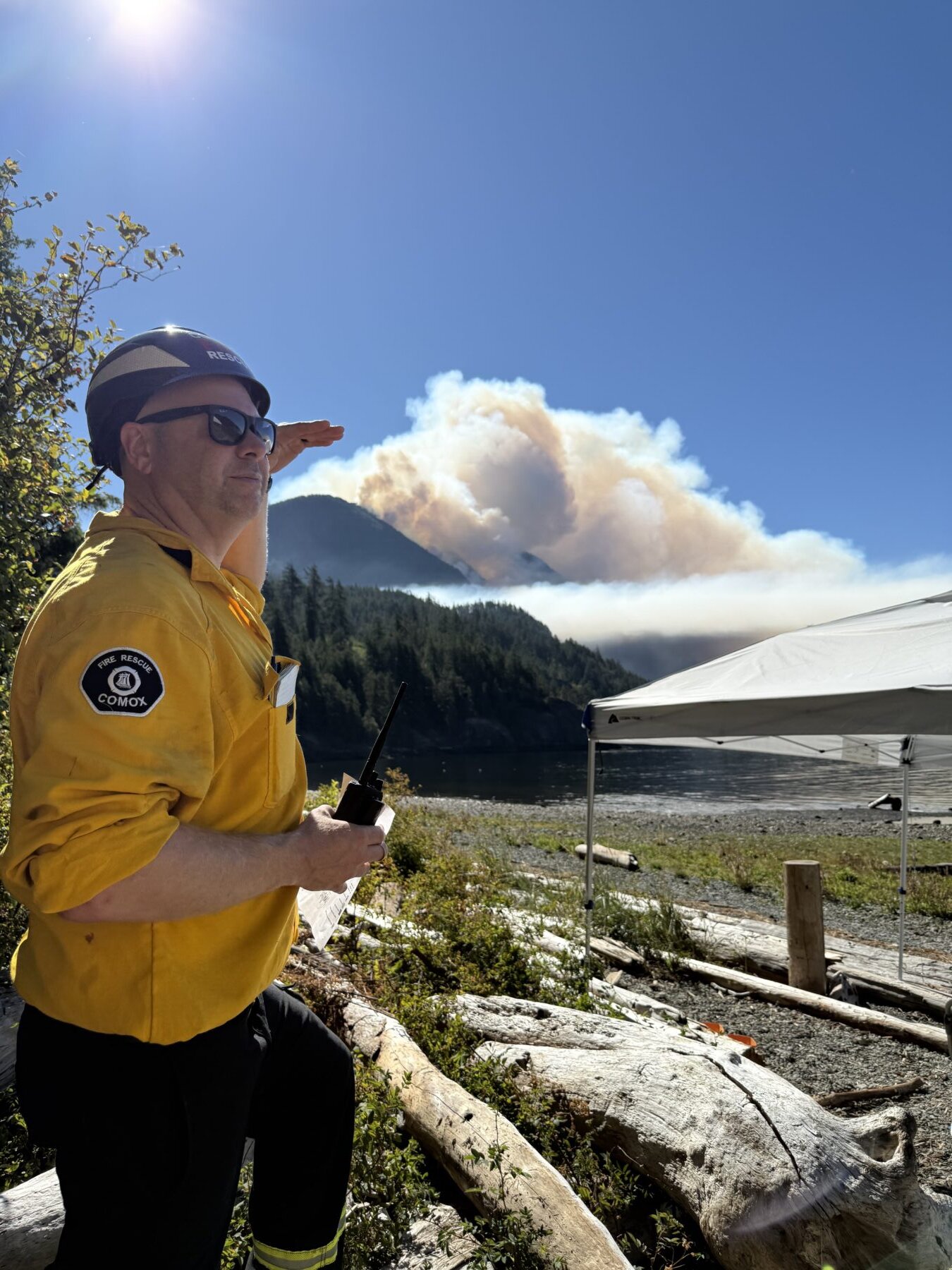
1) Where do you live and what geographical area do you cover? I am a Captain for Comox Fire Rescue, proudly serving the Town of Comox and the Comox Fire Protection District.
2) How long have you been an LFR? I have been part of FireSmart in the Comox Valley in 2020, and WMS since 2021.
3) What made you decide that you wanted to be an LFR and support homeowners and neighbourhoods on how to become FireSmart? Supporting FireSmart in our community is important to both myself, our fire department and community. The more preparation and involvement we see at the homeowner and neighbourhood level, the safer and more resilient our community becomes.
4) What are your 2 biggest challenges as an LFR? Currently I feel there has been still a feeling of “a wildfire can’t happen here.” However, we have seen this past summer with the 2 major fires on Vancouver Island, the Wesley Ridge and Mount Underwood wildfires, it can happen close to home. Weather patterns, climate change, homes moving more into the urban interface all add to a dynamic situation that we all need to focus on.
5) What are some of your successes with the FireSmart program? We have seen strong success with information booths at street market days and farmers markets, along with a door to door campaign in the highest WUI areas we protect. Providing homeowner assessments and sharing information is a great success we all can share. This past summer, I was deployed with our department to provide structural protection during wildfires on Vancouver Island. Seeing firsthand how community involvement in FireSmart practices helped save homes was powerful and encouraging.
6) What has been your favourite project/event you have done with your local FireSmart Program? The Comox Valley FireSmart Collaborative supported a free yard waste drop off at Vancouver Island Enterprises last April as a one month trial. Nearly 2,000 loads of yard waste were brought in by homeowners across the Valley. Thanks to the strong response, the program was extended for two months this past fall and will return again this April and May. This project gives homeowners a practical option for removing landscape materials that do not always fit in curbside bins. It has been very well received, and we are looking forward to welcoming everyone back this spring when the program returns.
7) What advice would you give to other LFRs? I would encourage anyone involved in FireSmart to know that programs like this, and the practices behind them, do work. They can and do help protect homes and property. This is not a one off effort. The real impact comes from continuing year after year, growing involvement and participation one neighbour and one neighbourhood at a time.
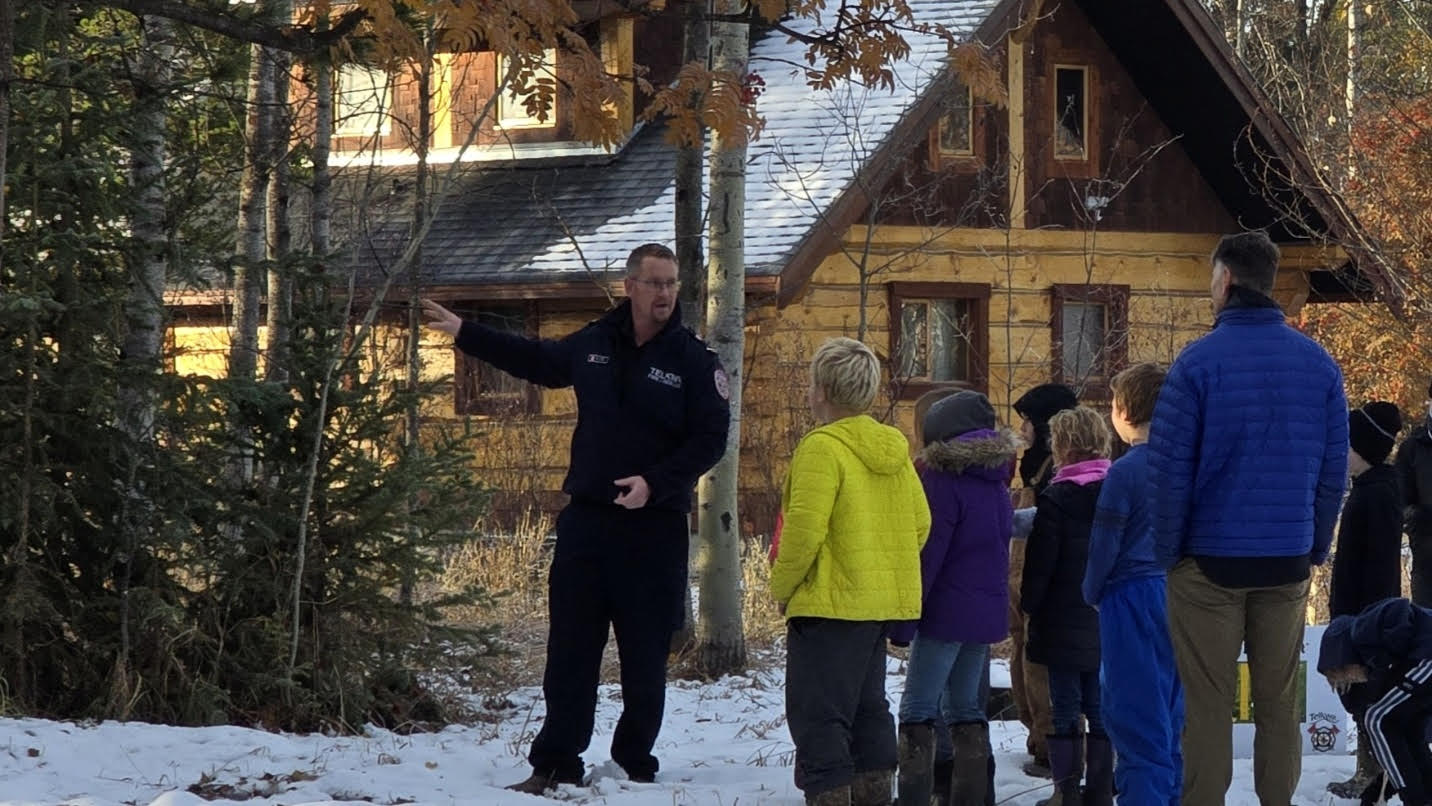
1) Tell us about yourself, Kevin. I have been a volunteer firefighter for 6 years with Telkwa Fire Rescue. I have lived with my family in Telkwa since 2017 and grew up just 15kms down the road in Smithers. I have 20 years’ experience as a carpenter where I had the privilege of building many new homes and renovations. My knowledge from my construction background has been an asset to firefighting and educating FireSmart within the community.
2) Where do you live and what geographical area do you cover? Telkwa BC, North-West region
3) How long have you been a WMS? I have been a WMS for 1 year but took the job full time this past May.
4) What made you decide that you wanted to be an WMS and support homeowners on how to become FireSmart? I wanted to bring knowledge from my construction and firefighting background together to help improve the wildfire resilience and education to my community.
5) What would you say are your 2 biggest challenges as a WMS ? Learning how to feel more comfortable with public speaking, and learning how to navigate the FireSmart program in the first few months.
6) What are some of your successes with the FireSmart program? 38 assessments, 4 FireSmart 101 presentations, 15 booth pop-ups, the Library Program, and the Education Program- where I had a wonderful experience with the grade 4 class last week, and a great time with the grade 6 and kindergarten class during their outdoor education class
7) What has been your favourite project/event you have done with your local FireSmart Program? Education Program- I put together a PowerPoint and taught the class a quick class then brought them outside to show them my demo treatment project and discuss fuels in the forest and around our homes. Then we burned my HIZ models- It worked perfectly.
8) What advice would you give to other WMSs? Stay persistent, stay positive, don’t be scared of public presentations. (it actually can be fun)
9) What is your favourite aspect of the FireSmart BC website ? Easy to navigate with lots of information.
1) Where do you live and what geographical area do you cover? Telkwa BC, North-West region
2) How long have you been an LFR? I have been a WMS for 1 year but received job as Telkwa’s FireSmart coordinator full time this past May.
3) What made you decide that you wanted to be an LFR and support homeowners and neighbourhoods on how to become FireSmart? I wanted to bring know knowledge from my construction and firefighting background together to help improve the wildfire resilience and education to my community.
4) What are your 2 biggest challenges as an LFR? Learning how to feel more comfortable with public speaking, as well as learning how to navigate the FireSmart program in the first few months.
5) What are some of your successes with the FireSmart program? 38 home assessments, 4 FireSmart 101 presentations, 15 FireSmart booth pop-ups, delivered the reading kit to the local library, and had a wonderful experience with the grade 4 class last week, and a great time with the grade 6 and kindergarten class during ththeirere outdoor education class (basecamp).
6) What has been your favourite project/event you have done with your local FireSmart Program? Education Program- I put together a PowerPoint and taught the class a quick class then brought them outside to show them my demo treatment project and discuss fuels in the forest and around our homes. Then we burned my HIZ models- It worked perfectly.
7) What advice would you give to other LFRs? Stay persistent, stay positive, and don’t fear public presentations. (it can be fun)
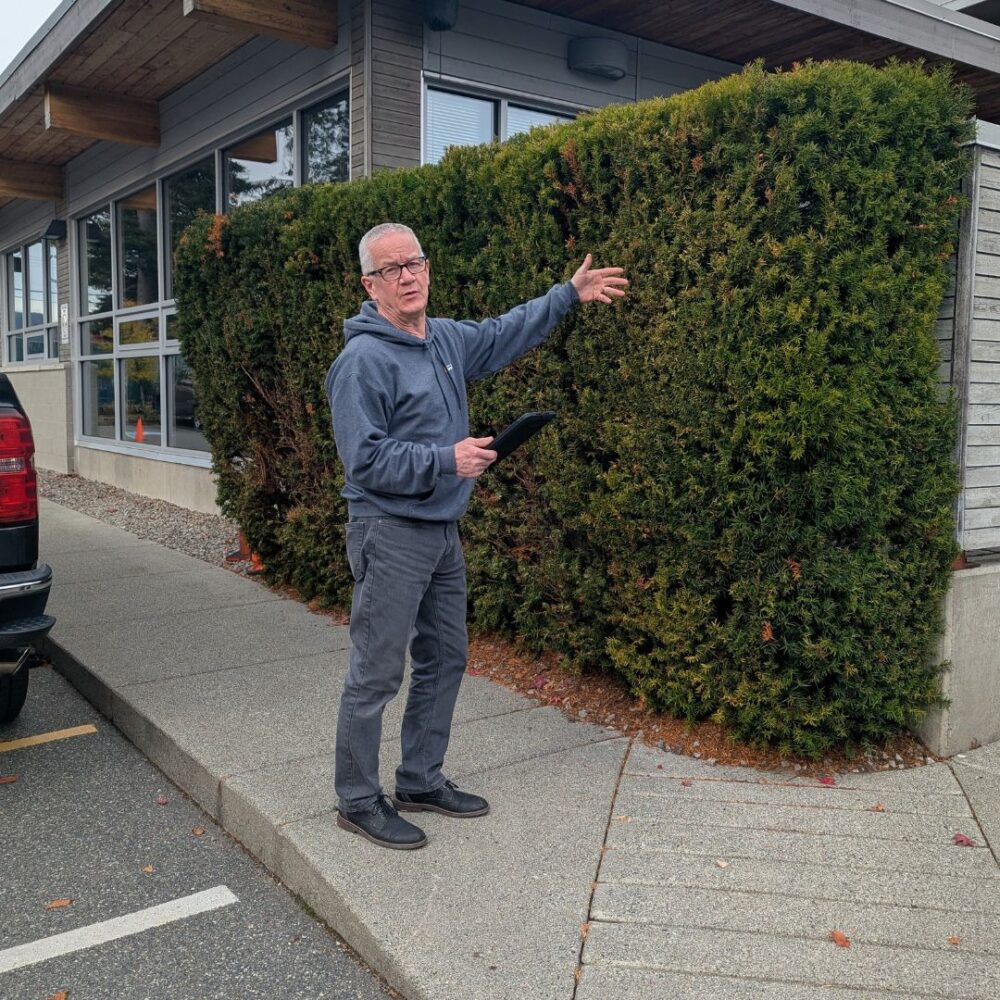
1) About Evan: Evan has been a POC structure firefighter for 25 years supporting three departments in the province including Whistler FRS, Nanoose Bay VFD and Coombs-Hilliers VFD where he was covering as Deputy Chief. Evan was involved in early efforts in Whistler with FireSmart and developed a passion for the principals in FireSmart and how he might support his local communities through resiliency and mitigation efforts. When Evan moved to the island in 2019 and joined Nanoose Bay VFD, FireSmart was just starting, he became a member of the FireSmart crew providing presentations and assessments in his local community. When the opportunity to become the FireSmart Coordinator role was offered, Evan accepted the role and quickly worked his way through the region to meet with all the fire Dept.’s and understand their capacity and success with FireSmart. Evan continues to drive FireSmart and is excited to see the growth of departmental participation this year. After becoming a WMS in February, Evan worked with FireSmart BC to become a trainer and has now supported 2 courses. Currently, the Regional District of Nanaimo has the most WMSs in the province (according to FireSmart BC) and every department (except one) in the region has at least 2 WMS trained crew. Evan is looking forward to seeing huge growth in assessments in 2025/26 and looks forward to continuing to lead FireSmart in the region.
2) Where do you live and what geographical area do you cover? I live in Nanoose Bay on Vancouver Island and hold the role of FireSmart Coordinator role is for the Regional District of Nanaimo which spans from north of Ladysmith all the way to Bowser and Deep Bay (not including incorporated areas)
3) How long have you been a WMS? I was certified in Feb, 2025.
4) What made you decide that you wanted to be an WMS and support homeowners on how to become FireSmart? I have been a Paid-on Call Structural Firefighter for 25 years and became aware of FireSmart in Whistler 10 ish years ago. When I moved top the island in 2019, I joined Nanoose Bay VFD and took a more active role with FireSmart HIZ inspections in Nanoose Bay which led to the desire to pursue and attain the Coordinator position with the region to support FireSmart education for my neighbours and community.
5) What would you say are your 2 biggest challenges as a WMS? Getting the message out and getting people engaged to maintain their properties.
6) What are some of your successes with the FireSmart program? We have 25+ WMS’s in the RDN now (none at the start of the year) and I have been able to teach the WMS program. Additionally, attending the 2025 summit and the depth of learning there was incredible. Finally, purchasing and equipping the SPU trailer this spring was very satisfying, as much of the equipment was used at the Wesley Ridge wildfire event in August to directly protect homes.
7) What has been your favourite project/event you have done with your local FireSmart Program? I recently assisted a neighbourhood in Deep Bay with a project to remove combustible shrubs from their neighbourhood and we loaded two bins. It was exciting to directly support an engaged neighbourhood. I love doing presentations and sharing my passion and knowledge for FireSmart.
8) What advice would you give to other WMSs? Stick with it; one step becomes two, becomes four and engagement takes time.
9) What is your favourite aspect of the FireSmart BC website? The virtually unlimited resources available and depth of knowledge across the province with a motivated and positive reception from everyone I meet.
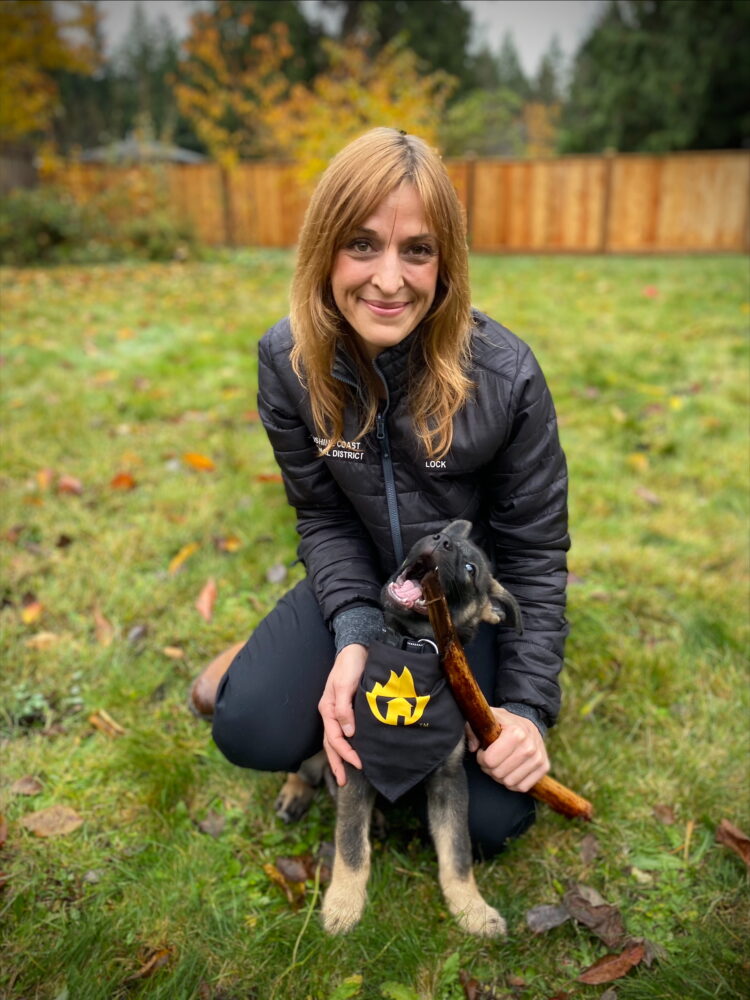
1) Where do you live and what geographical area do you cover? I live in Roberts Creek, on the beautiful Sunshine Coast. Our team covers the entire Sunshine Coast Regional District, which runs from ferry to ferry and includes several gulf islands as well.
2) How long have you been an LFR? I have been working with the SCRD FireSmart team for almost two years.
3) What made you decide that you wanted to be an LFR and support homeowners and neighbourhoods on how to become FireSmart? Wildfires can feel extremely overwhelming, and as though there is “nothing we can do” to prevent or control them. The FireSmart program empowers homeowners by aiding in the understanding of fuel management, and by providing practical, tangible steps that allow homeowners to feel a much greater level of understanding, safety and control in the face of a scary situation.
4) What are your 2 biggest challenges as an LFR? One of the most common reasons I hear for not wanting an assessment is that we will tell them to ‘cut down all their trees’. While some limbing, trimming and thinning can certainly make a huge difference, maintaining the integrity of the wildland ecosystem is also a top priority of the program, and I will pretty much never suggest removing a healthy, mature tree! Another challenge we regularly face is concern over the monetary cost of some of the mitigation work. While some things inherently come with a large price tag (eg. a roof upgrade), there are many steps that can be implemented at little or no cost, and can make a major difference!!
5) What are some of your successes with the FireSmart program? I am extremely proud of the overall support we have received for the FireSmart program in our district. We have already accomplished a few hundred individual assessments, and have several recently certified FireSmart Recognized Neighborhoods across the region. The program is only as strong as the community buy in, and I am so proud of and grateful for all the hard work of the residents here to create a more resilient community.
6) What has been your favourite project/event you have done with your local FireSmart Program? Our team has partnered with the Girl Guides of Canada to create the first ever FireSmart Program delivered specifically for their group. They learn basic FireSmart principles and complete an HIZ assessment, participate in a variety of firefighter games, and earn a keepsake Ember badge at the end. It has been so inspiring working with these girls and young women (ages 6-17) and to ‘spark’ their interest in the world of wildfire and fire safety/ prevention.
7) What advice would you give to other LFRs? The strength of the program lies in the support of the people. Take the time to listen to them, hear their concerns, and relate to them on an individual level. The more that people feel heard and connected, the more likely they are to accept advice and incorporate best practices into their daily lives. People don’t want to be “told,” they want to learn and understand. By building connections through being supportive, empathic, genuine and honest, the program can rest on a solid foundation of mutual commitment to shared goals, and the forward momentum will continue naturally.
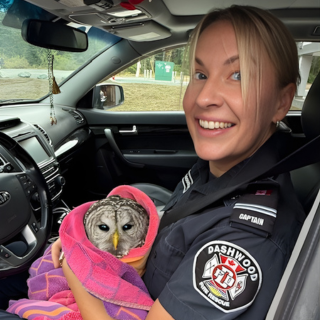
1) Where do you live and what geographical area do you cover? Qualicum Beach, covering the fire response area of the Dashwood Fire Department (Dashwood and Meadowood)
2) How long have you been an LFR? 5 years
3) What made you decide that you wanted to be an LFR and support homeowners and neighbourhoods on how to become FireSmart? I knew that the Dashwood Fire Department had a high risk WUI zone in our response area and I wanted to help educate, and support, the community so they could be better prepared.
4) What are your 2 biggest challenges as an LFR? Roadblocks with residents being able to undertake/afford mitigation activities and continuity/availability of funding for ongoing activities as issues are discovered.
5) What are some of your successes with the FireSmart program? We have 10 FireSmart Recognized Neighbourhoods in Dashwood’s Response Area and just undertook a successful evacuation of 260 residences from an area under imminent threat from a Wildfire. In the end no primary structures were lost and some of that success was attributed to the FireSmarting around those properties.
6) What has been your favourite project/event you have done with your local FireSmart Program? The annual chipping and education events in the LQRV FireSmart Neighborhoods have been a great way to watch the evolution and continued engagement with the program and have allowed me to continue maintaining the relationships inside that community.
7) What advice would you give to other LFRs? Don’t get disheartened when your first few events have low turnout, keep the fear-mongering to a minimum, listen to what residents are saying and you will start to understand the roadblocks (which in turn allows you to solve them), don’t take no for an answer (from anyone), and make sure you are covering all 7 FireSmart Disciplines (not just the fuel mitigation aspect)!
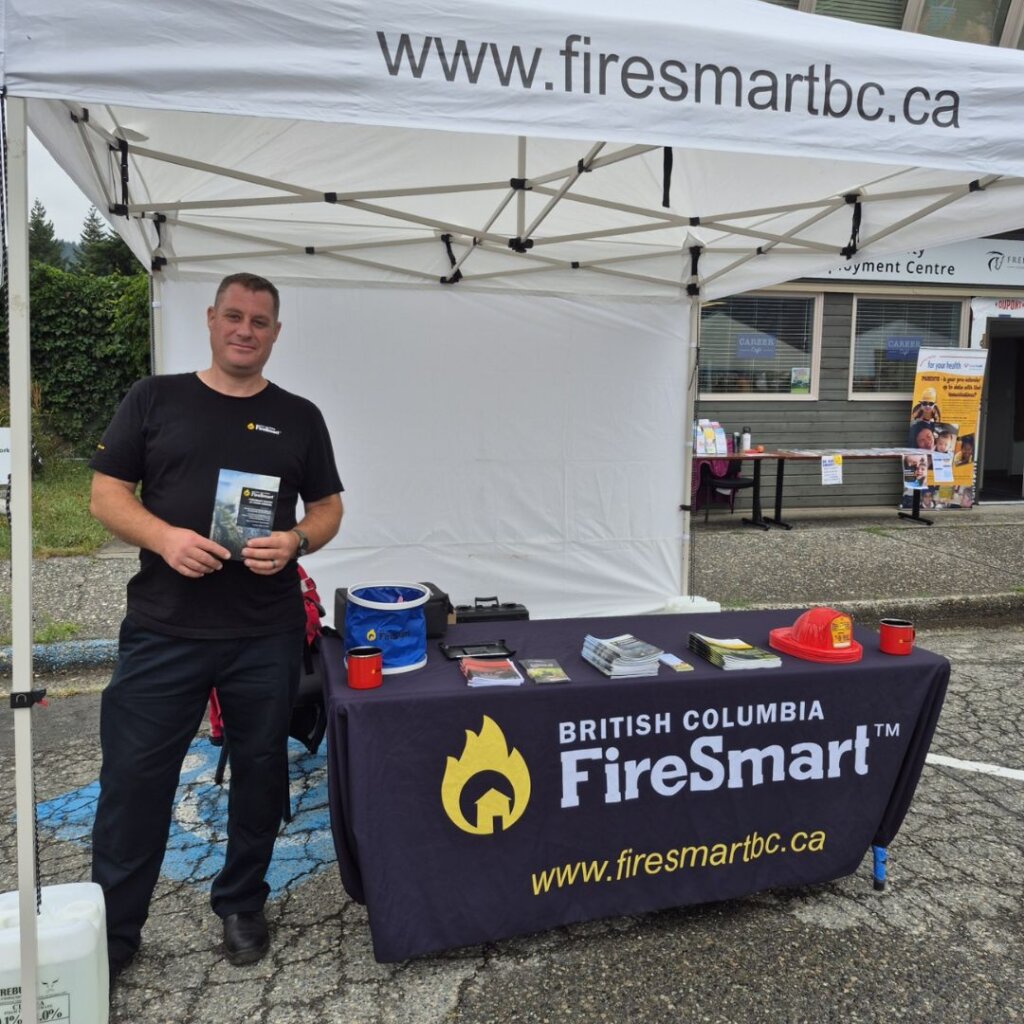
1) Tell us about yourself. I have lived in Hope, BC for the past 12 years with my wife and children. I have served this community since 2018 as a volunteer firefighter for the district of Hope, and in June 2024 I was certified as a wildfire mitigation specialist. In June 2025, I took a part time position within the Hope Fire Dept. as a firesmart crew member. I perform regular firesmart hands-on mitigation work, and also attend various public events to promote wildfire mitigation; it is something that I am extremely passionate about. I have experienced the devastation of wildfires while deployed throughout BC, assisting BC wildfire with structure protection and fire suppression. The town of Hope is a wildland-urban interface and is at high risk for wildfire; a big reason why I so ardently believe in spreading public awareness and education for wildfire mitigation. In addition to volunteering in my local fire department, my wife and I also own and operate a small construction company.
2) Where do you live and what geographical area do you cover? I live in Hope, BC and I service the district of Hope.
3) How long have you been a Wildfire Mitigation Specialist (WMS)? I have been a WMS since June 2024.
4) What inspired you to become a WMS and help homeowners become FireSmart? Seeing and experiencing the devastation of wildfire damage in other communities gave me the desire to help prevent this devastation in my own community.
5) What would you say are your two biggest challenges as a WMS? The struggle of getting some home owners to understand that their property is not as fire resilient as they believe it to be, or explaining that certain aspects of their home & property are at a far greater risk of catching fire than they realize.
6) What have been some of your biggest successes with the FireSmart program? The door-to-door campaign has been a big success in raising community awareness about wildfire mitigation. Many residents of Hope are now much more knowledgeable about different methods of property protection against wildfires.
7) What has been your favourite project or event with the local FireSmart program? A favourite of mine is presenting at the Hope Brigade Days Fair, as well as completing hands-on mitigation work for Hope residents.
8) What advice would you give to other WMSs? Don’t get discouraged about the negativity that some home owners have regarding what we do as WMS’s. You ARE making a difference in your community.
9) What’s your favorite aspect of the FireSmart BC website? The volume of information available on the FireSmart website, especially “Ember’s Den.” There is a lot of interactive stuff in Ember’s Den for all ages.
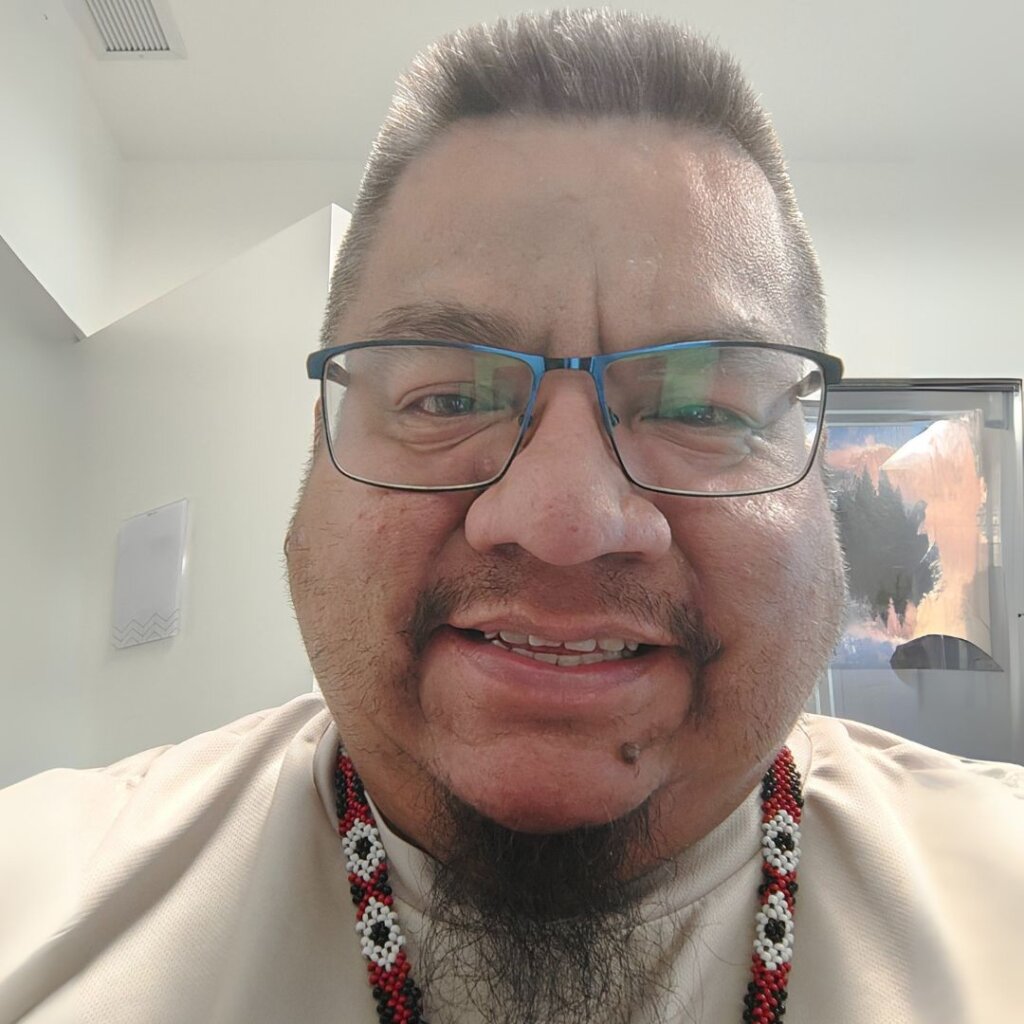
1) Where do you live and what geographical area do you cover? I live in Hope, BC but I work in Chilliwack, BC for SAY Lands that covers 3 communities.
2) How long have you been an LFR? I started training to be an LFR since the beginning of June.
3) What made you decide that you wanted to be an LFR and support homeowners and neighbourhoods on how to become FireSmart? I want to do something positive for not only my people but our communities. Making sure our young people have a place to call home for generations to come.
4) What are your 2 biggest challenges as an LFR? Getting people to understand what FireSmart is all about, that’s why I was thinking incorporating cultural teachings in with FireSmart would be a good idea.
5) What are some of your successes with the FireSmart program? Achieving a handful of training Certificates that I take great pride in.
6) What has been your favourite project/event you have done with your local FireSmart Program? WMA’s is my new passion, and our Community Open House was a very good experience that gave me a better idea on what kind of message that I need to be spreading. Including cultural teaching in with FireSmart gives my people a little bit of something that they can relate to, and by simplifying the message really helps people get a better understanding of the importance of creating Wildfire Resiliency.
7) What advice would you give to other LFRs? Get a feel for the people within the community in an Open House setting or some other similar event, communicating and observing how people talk will give you a better understanding of what kind of message that you need to be sending out to your people about FireSmart Preparedness.
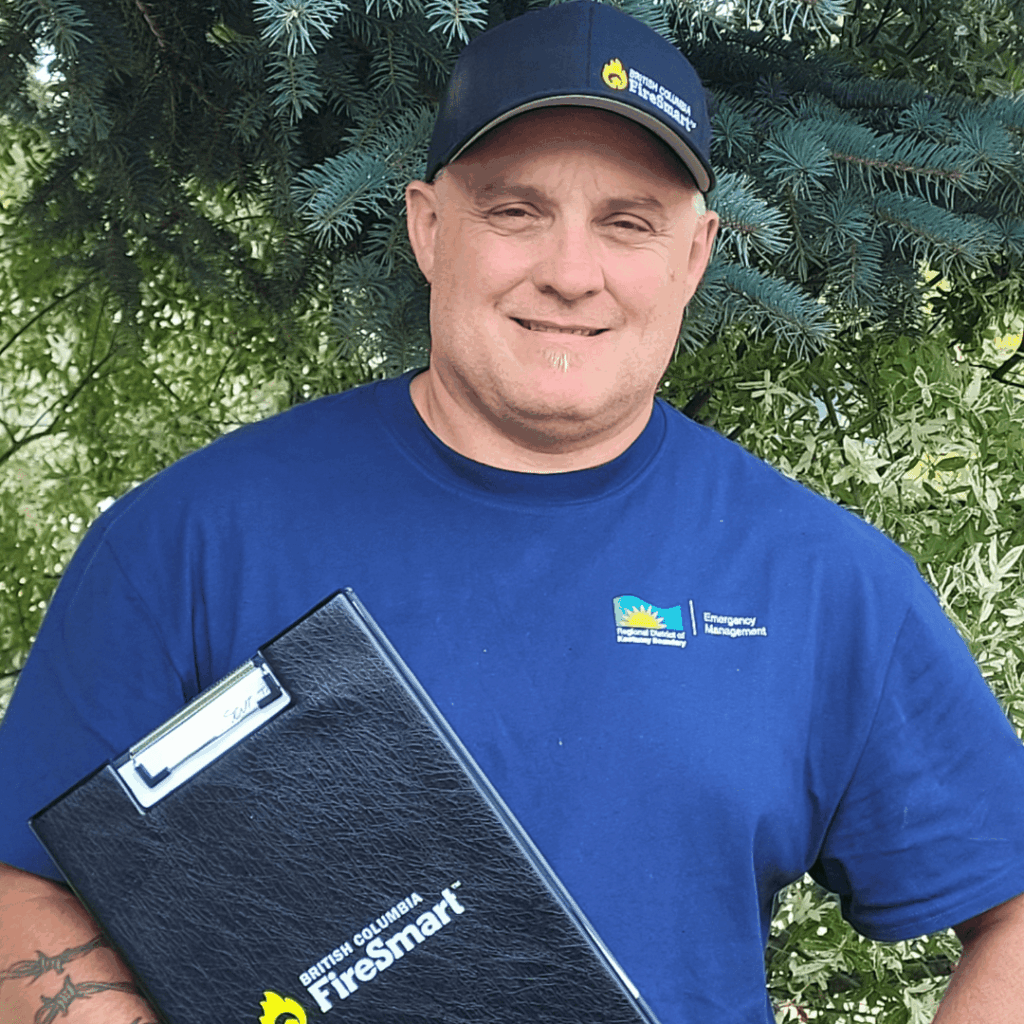
1) Where do you live and what geographical area do you cover? I live in Christina Lake and cover the RDKB area in Grand Forks and Christina Lake.
2) How long have you been a WMS? This is my second year working as a WMS for the Regional District of Kootenay Boundary.
3) What made you decide that you wanted to be an WMS and support homeowners on how to become FireSmart? After completing five wildfire deployments in 2023 with the Christina Lake Fire Department, I witnessed firsthand the devastation caused by wildfires. Being on the ground during those emergencies made me realize how much more could be done proactively to reduce the impact of wildfire events. It’s incredibly difficult for families and firefighters to face that kind of destruction. If I can help homeowners take preventative steps, it not only supports them but also eases the burden on the fire services.
4) What would you say are your 2 biggest challenges as a WMS?
One of the biggest challenges is changing the mindset that FireSmart is just about removing a few trees. Many people are surprised during an assessment when they realize how many other factors contribute to a home’s vulnerability.
Another challenge is doing follow-up reassessments and seeing that only minimal changes have been made, like removing a few trees in the 30-metre zone. It can be disappointing, but I remind myself that my role is to provide the knowledge and guidance, it’s up to the homeowner to take the next steps.
5) What are some of your successes with the FireSmart program? Seeing homeowners taking real pride in the work they’ve done after receiving a FireSmart assessment is incredibly rewarding. Many people put a lot of trust in our recommendations, and the appreciation they show is very meaningful. I’ve also found that sharing my own experiences from wildfire deployments makes a real impact. It gives context and credibility to the importance of being FireSmart.
6) What has been your favourite project/event you have done with your local FireSmart Program? I really enjoy being out in the community whether that’s at a farmers market or giving a FireSmart presentation. Engaging with large groups who are genuinely interested in learning and asking questions is always a highlight. My background in wildfire response gives me valuable insights that I’m able to share, which helps drive home the importance of preparedness.
7) What advice would you give to other WMSs? Be as visible in your community as much as possible. Attend farmers markets, give presentations, or even just set up a table at your local grocery store (my personal favorite). If you’re part of a fire department, try to get out on a deployment to experience wildfire conditions firsthand. If not, take the initiative to talk with local firefighters or do your own research. And above all, be patient. People are on different journeys when it comes to becoming FireSmart. Sometimes all it takes is hearing, “Hey, my home’s not perfect either, but I’m working on it,” to really connect with someone.
8) What is your favourite aspect of the FireSmart BC website? The wide range of resources available. If I’m ever unsure about something, it’s easy to find answers quickly. I also like being able to refer homeowners to the site so they can explore further information at their own pace.
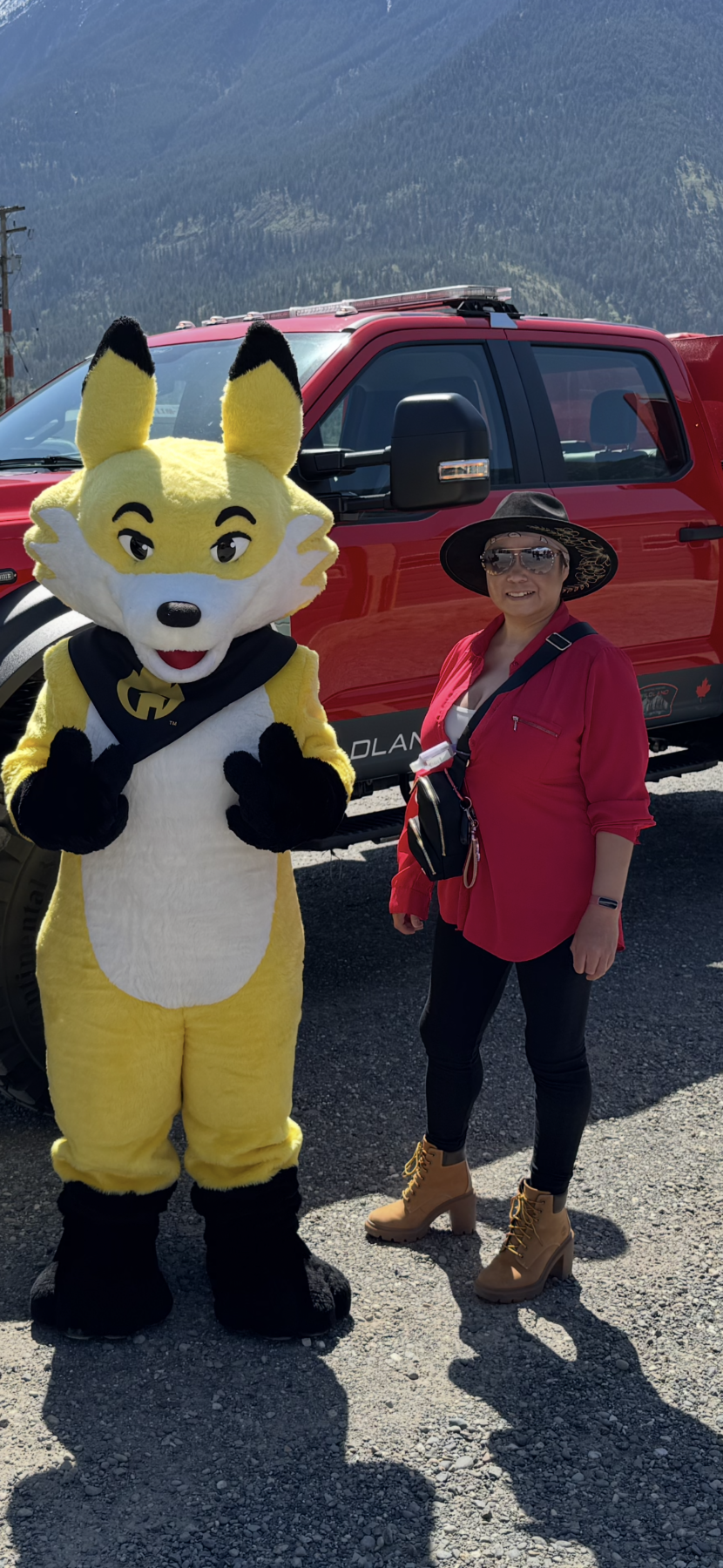
1) Where do you live and what geographical area do you cover? I live, work and play on the traditional lands of the Kanaka Bar Indian Band, which is one of the communities in Lytton BC.
2) How long have you been an LFR? I have been an LFR since the Fall of 2018, but really got my feet in as an LFR in the last couple years. I originally took the training as a learning tool about FireSmart, but became more interested. I am the FireSmart Coordinator for Kanaka Bar as well.
3) What made you decide that you wanted to be an LFR and support homeowners and neighbourhoods on how to become FireSmart? I have done a lot of work in Fuel Management, running crews. FireSmart peaked my interest when I heard about it and wanted to learn more. I was told about the LFR course and enrolled. Once I took the course it got the ball rolling on my FireSmart journey. Little did I know Kanaka was already well on their way to being FireSmart we just didn’t know that we were doing it. So, I have been educating the community and keeping our FireSmart program going. With the devastating Lytton Fire of June 30, 2021 was when I really wanted to start promoting FireSmart in our community. I wanted to help our community and others from suffering the same devastating outcome. I love seeing how the FireSmart program has grown over the years and that there are so many sources out there now.
4) What are your 2 biggest challenges as an LFR?
5) What are some of your successes with the FireSmart program? Kanaka has been a FireSmart “Community” but is now changed to the new “FireSmart Neighbourhood” since 2019, every year we try to do a little here and there to keep our recognition current. I host a FireSmart Info session every year hoping to get more people engaged. I feel even if I just get one more person every year engaged and asking me questions that I have done good for that year. Kanaka Leadership fully supports FireSmart initiatives and supports financially to do some firesmart work annually. I had a crew go into every yard and remove brush, trees, and debris. The following year the crew did the next neighbourhood all funded through leadership before we applied for any CRI funds.
6) What has been your favourite project/event you have done with your local FireSmart Program? I really enjoy the community engagement of our FireSmart Day events. We have good turn outs and we bring in outside organizations to help with education and presentations. Summer Student youth program. I hired youth summer students to go into elders homes and carry out the FireSmart works weed whacking, removing brush and combustible debris.
7) What advice would you give to other LFRs? Take baby steps, every little bit helps. It doesn’t have to all be done at once. Reach out for help when needed there are a lot of FireSmart people that are passionate and willing to help you succeed. You are never alone even if it feels like it. It may seem scary and overwhelming at first but start small, work your way through. Education is key, info sessions, social media. Keep on, you are going to do great things!
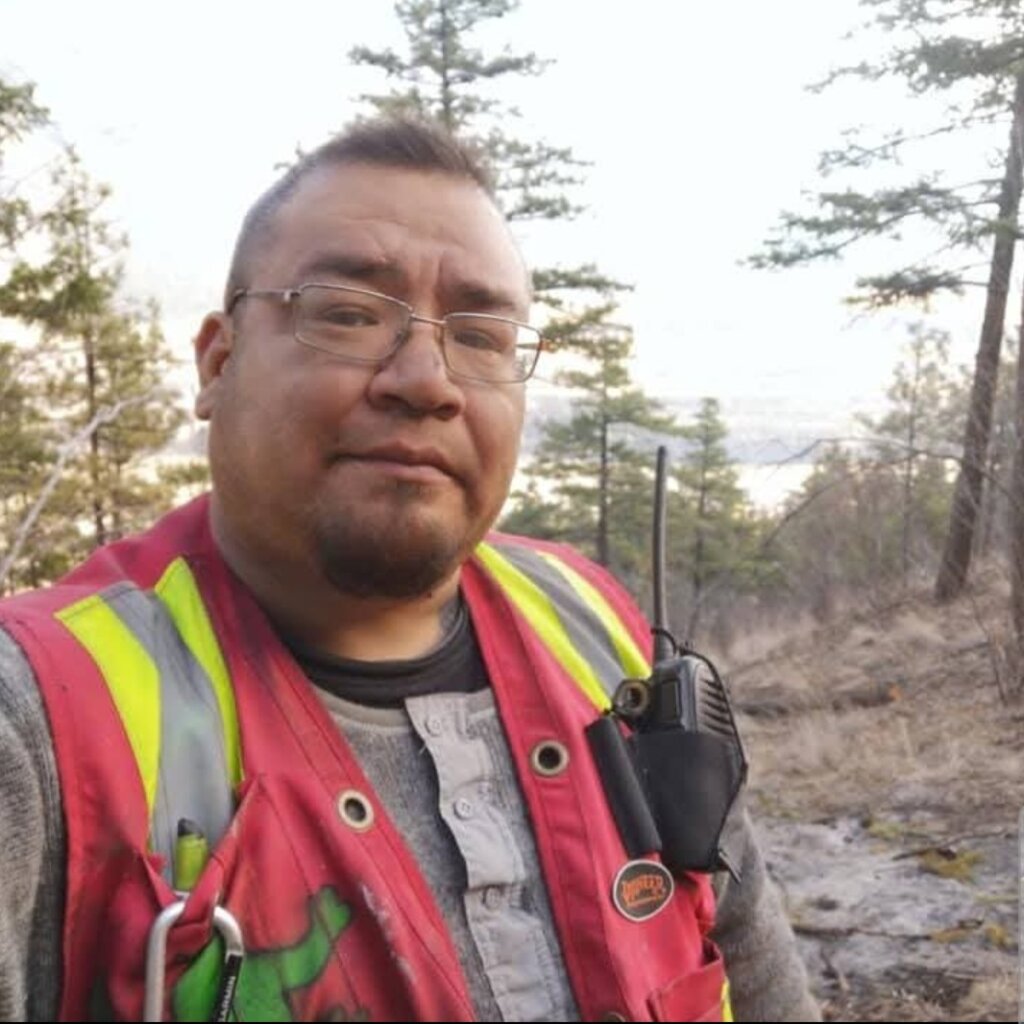
1) Tell us about yourself and your time as a WMS. My name is Myrus Doss, Fire Coordinator for T’it’q’et Administration. I was born and raised in Lillooet. I have been working in the forestry industry for 14 years. Doing Wild lands Fire Fighting type 3, and winter worked Fuel Management. Now I manage the Wildlands Fire Fighting Crews and Fuel Management crews. I am Fire Smart Coordinator, manage the crews and assessments, and I am on the Land Code Committee as the ChairPerson as well. I love what I do and am happy to be in a position that helps my community. I am compassionate about helping people work. I would like to continue on my role and hope more communities and members are more active and helping others to be FireSmart.
2) Where do you live and what geographical area do you cover? I live in Lillooet B.C. I cover most areas close to homes for my projects in fuel management and fire smart.
3) How long have you been a WMS? I have been a WMS for over a year.
4) What made you decide that you wanted to be an WMS and support homeowners on how to become FireSmart? I enjoy the projects and it is in my field of work I do most time around the community.
5) What would you say are your 2 biggest challenges as a WMS? My biggest challenges are trying convince someone that the tree is dead and need remove it, some don’t like the change and like their trees to stay.
6) What are some of your successes with the FireSmart program? Biggest success is happy homeowners and community for the work done.
7) What has been your favourite project/event you have done with your local FireSmart Program? The challenges, I like the challenges for some areas, look impossible to do , good team work and communication gets it done.
8) What advice would you give to other WMSs? Take your time and get to know your area you working in. communicate with them and everyone will be happy end the day.
9) What is your favourite aspect of the FireSmart BC website? I like all of the information on the website.
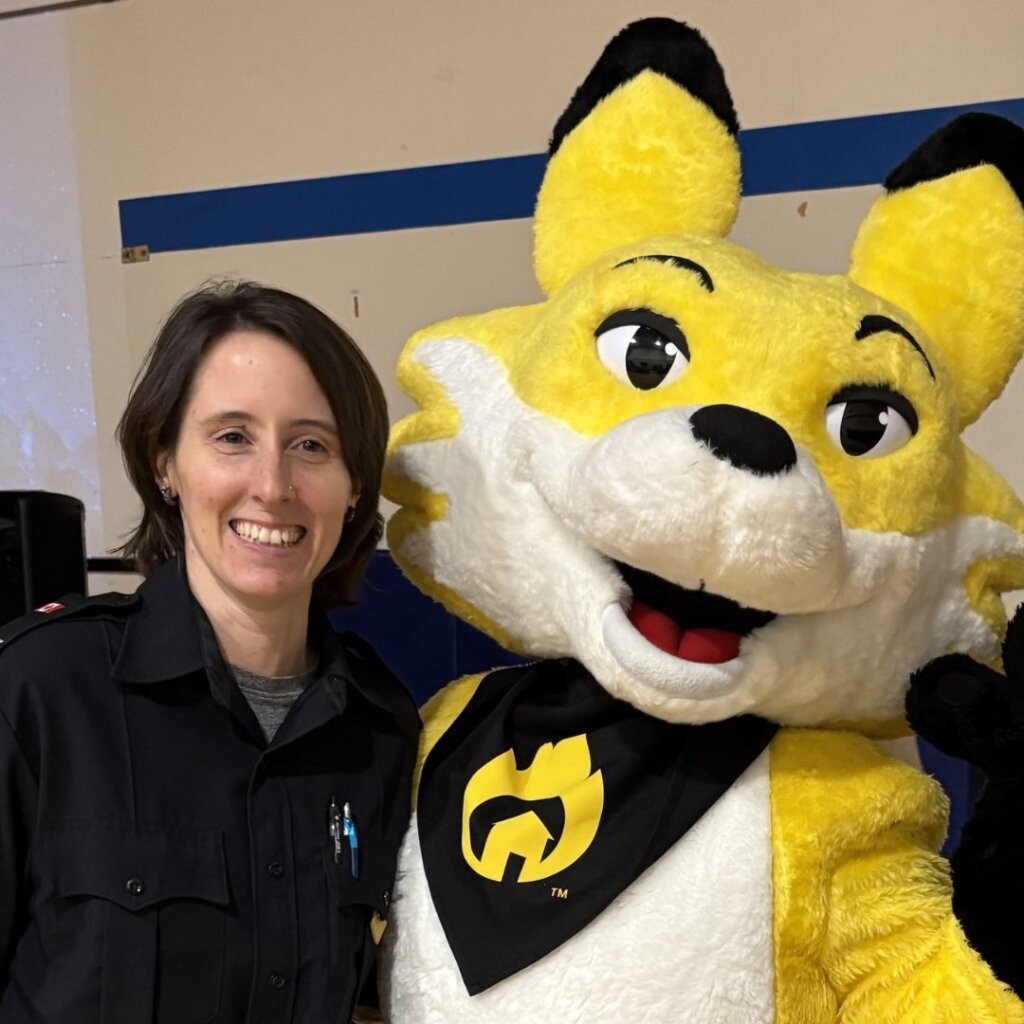
1) Where do you live and what geographical area do you cover? I live in Blind Bay. And as the CSRD FireSmart coordinator, I cover both regions of Shuswap and Columbia = 7 electoral areas that span from the Skwlāx te Secwepemcúl̓ecw territory to the West across to the Albertan border in Field to the East, North Okanagan/ Trout Lake/Parsons to the South and the mountainous region north of Kinbasket lake.
2) How long have you been an LFR? 5 years.
3) What made you decide that you wanted to be an LFR and support homeowners and neighbourhoods on how to become FireSmart? It was the perfect opportunity to combine my 2 passions: fire and community development. I am a POC firefighter with the White Lake Fire Department and have always been involved with community-building initiatives in my past. I love being an educator … and love learning and sharing with people. Life is too short to get boring!
4) What are your 2 biggest challenges as an LFR?
5) What are some of your successes with the FireSmart program?
6) What has been your favourite project/event you have done with your local FireSmart Program? Our first Neighborhood Champions Gathering and watching all the ideas buzzing out of the room, how keen those community leaders were to discuss and share with each other, considering all options, looking at challenges and looking at viable solutions together. Plus, we had a fun speed-dating event as an icebreaker which was a blast!
7) What advice would you give to other LFRs? Be curious! Keep educating yourself. Wildfires are a global issue and there are so many opportunities to learn from each other. Be patient, don’t give up. Adapt your message to your audience, get to know your your community. And keep it simple, a few recommendations at a time. And give people simple and achievable solutions and not just a long list of issues. Build strong relationships with your communities, nurture the trust you earn. And nurture your champions, they are your best allies!
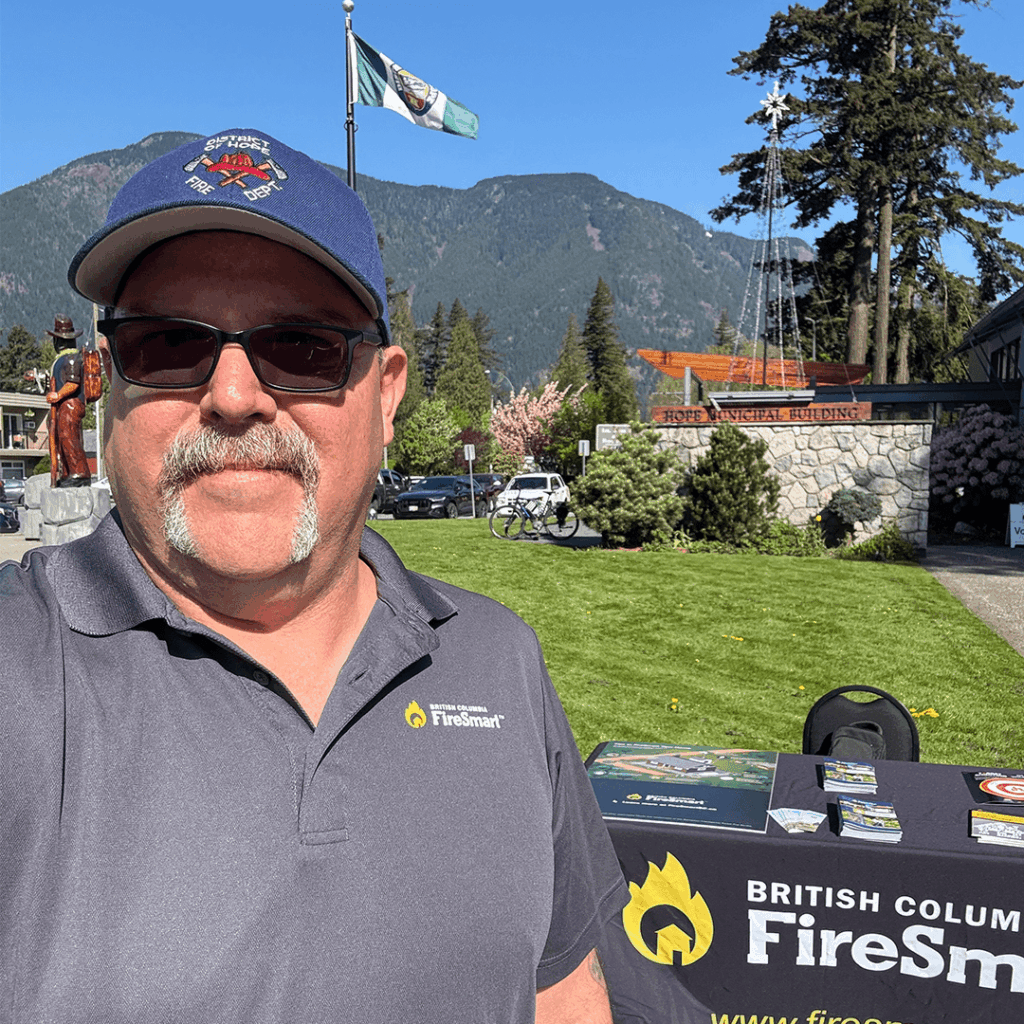
1) Where do you live and what area do you cover? I live and work right here in the District of Hope. This is my community—and protecting it is both my job and my passion.
2) How long have you been a Wildfire Mitigation Specialist (WMS)? Just over a year—and what a year it’s been! The work is incredibly rewarding.
3) What inspired you to become a WMS and support homeowners on their FireSmart journey? As the FireSmart Coordinator, I saw the Wildfire Mitigation Program as a real game-changer—a way to move from education to action. It gives us the chance to make a measurable, lasting impact by guiding residents with personalized advice and a rebate program that turns their goals into reality. It’s about empowering people and helping them take charge of their own wildfire resilience.
4) What are the two biggest challenges you face in your role? First, helping residents stay focused on what they can control—their own properties—rather than worrying about what their neighbors are or aren’t doing. Second, encouraging follow-through on the bigger mitigation projects. We’ve all got long to-do lists, and motivating action takes persistence and creativity.
5) What are some standout successes from your FireSmart efforts so far? Last year, we conducted 80 Wildfire Mitigation Property assessments and 20 assessments on critical infrastructure—all while completing our district’s Community Wildfire Resiliency Plan. Two homeowners achieved full FireSmart certification, and six of our fire department members earned their WMS credentials. That’s a strong foundation, and we’re only getting started.
6) What’s been your favorite FireSmart event or project? Hands down, organizing joint training exercises between the BC Wildfire Service and the Hope Fire Department. It’s been a win-win for both agencies and has now become a regular part of our annual training calendar. Collaboration like this strengthens our response and builds lasting partnerships.
7) What advice would you offer to other WMSs out there? Network like crazy. Get involved early with your regional Community Wildfire Resiliency Collaborative. Don’t work in a silo—connect with your fellow WMS professionals and share ideas. Every community is unique, but the tools and tactics we use have a lot in common. Learn from one another.
8) What’s your favorite part of the FireSmart BC website? I love that the site now includes the FireSmart BC Network. It’s made it so much easier to find the right contacts and deliver timely, accurate information to our residents. At the same time, it’s intuitive and welcoming to the public—which makes our job that much easier.
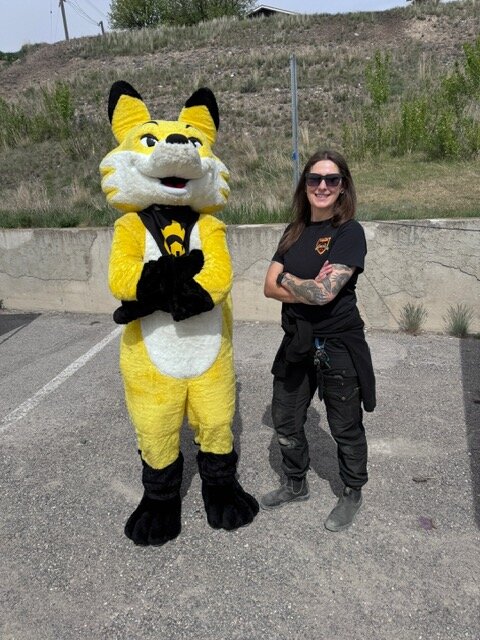
1) Where do you live and what geographical area do you cover? I live in the Columbia Valley and work within the District of Invermere.
2) How long have you been a Local FireSmart Representative (LFR)? I’ve been an LFR since October 2023, and I’ve served as the FireSmart Coordinator for the District of Invermere since September 2024.
3) What inspired you to become an LFR and support homeowners and neighbourhoods in becoming FireSmart? My first wildfire deployment in 2023 was a turning point. Seeing the impacts of wildfire up close made it clear how much of a difference proactive measures can make. Homeowners have the power to significantly increase their property’s resilience through simple, practical steps. I wanted to help share that knowledge and empower communities to act before a wildfire strikes. I’m also grateful to Jessica Chalmers (RDEK WMS), who mentored and supported me early on—her guidance was invaluable.
4) What are your two biggest challenges as an LFR? One of the biggest challenges is community engagement. While interest builds over time, encouraging residents to actively participate and understand the risks versus benefits can be tough. Another challenge is shifting the mindset—many people are more concerned about what’s happening on their neighbour’s property or in the surrounding forest than taking steps to safeguard their own homes first. Getting them to start at home is key.
5) What are some of your successes with the FireSmart program? We recently launched a new chipping program within the District, and the response has been overwhelmingly positive. There’s also been a high demand for Wildfire Mitigation Home Assessments—we’re currently booking about a month in advance. In addition, we’ve just completed our Community Wildfire Resiliency Plan, which outlines strategic priorities and areas of focus for future mitigation efforts within Invermere.
6) What has been your favourite project or event with your local FireSmart program? The Pine Ridge Community Clean-Up stands out as a favourite. It was my first event and had a noticeable impact—we managed to significantly clear a hillside adjacent to the neighbourhood. The turnout was fantastic, and even the developer got involved. It was a great example of community collaboration, and I’m excited to support and organize more events like this.
7) What advice would you give to other LFRs? Focus on education. Sharing information and resources is one of the most valuable things we can do. Engaging homeowners in a way that resonates with them is crucial. Also, be patient—FireSmart work takes time. Start small, build relationships, and the momentum will grow naturally.
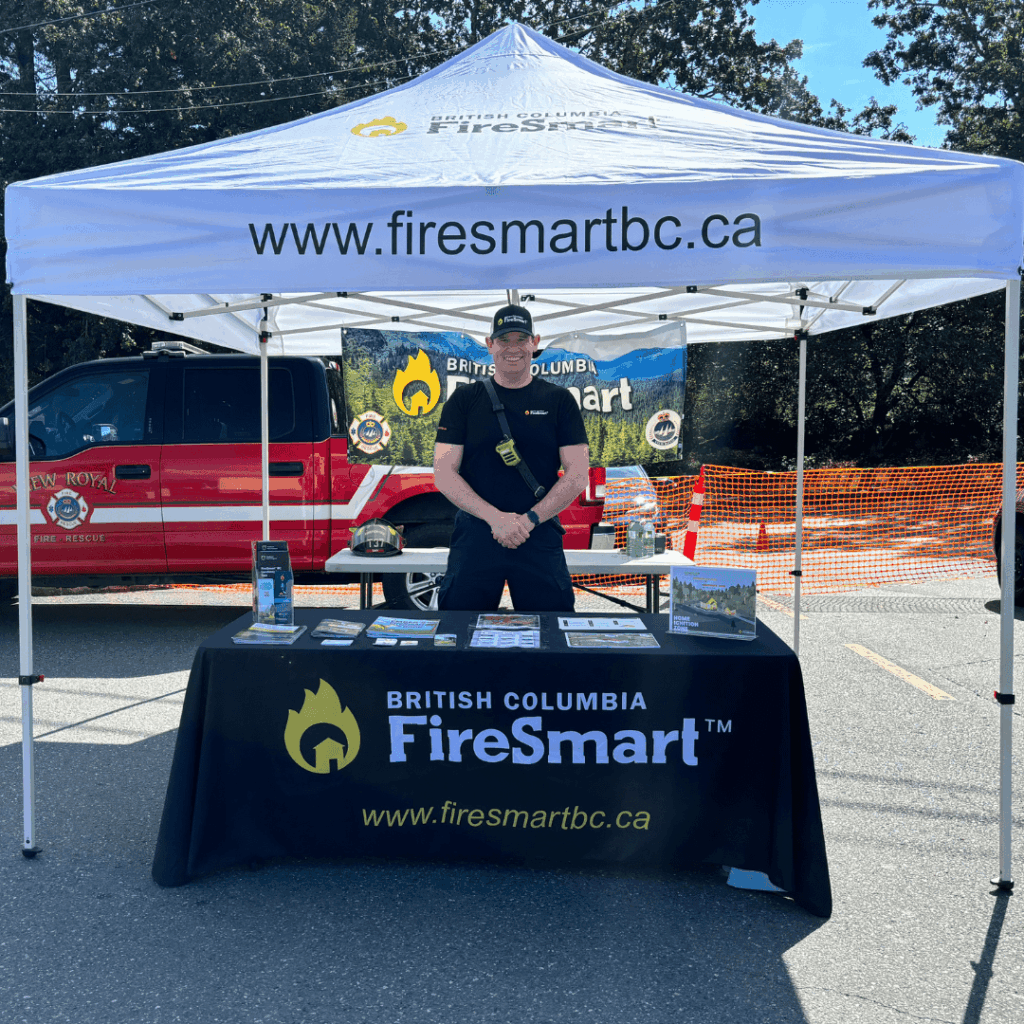
1) Where do you live and what geographical area do you cover? I live on southern Vancouver Island where I am the FireSmart Coordinator and Wildfire Mitigation Specialist with View Royal Fire Rescue in which I oversee the FireSmart Program for the Town of View Royal. In addition to overseeing the FireSmart program, I am also a Paid-On-Call Firefighter with View Royal Fire Rescue.
2) How long have you been a WMS? I started as the FireSmart Coordinator with View Royal Fire Rescue in July 2024 and completed my Wildfire Mitigation Specialist Certification in September 2024.
3) What made you decide that you wanted to be a WMS and support homeowners on how to become FireSmart? I became interested in FireSmart and wanted to become a WMS due to the increasing severity and impact of wildfires in our province and the opportunity to help make our community more resilient to wildfire. Becoming a WMS provided me with the knowledge and ability to assist homeowners to prepare for wildfire and help reduce the risk of wildfire to their property. FireSmart is a well supported, trusted and scientifically proven program that has been adopted throughout the province. I am grateful and proud to be part of a program that is committed making our communities more resilient to wildfire.
4) What would you say are your 2 biggest challenges as a WMS? Awareness – Gaining initial awareness on the program locally can take time. However, through leveraging the great resources available through FireSmart BC to help educate homeowners on the risks of wildfire to their property and what easy steps homeowners can take to make their homes more resilient to wildfire, awareness and engagement on the program grew quickly. Relevancy in the Fall and Winter – In the fall and winter seasons, the focus around wildfire risk decreases and with this wildfire resiliency can become less of a priority for homeowners. Continuing to stay connected with the community during the fall and winter through ongoing communication, information sessions/community events, fall cleanups/chipping events and through promoting the FireSmart Canada Neighbourhood Recognition Program Incentive and Community Wildfire Resiliency Day Award in February, helped to keep homeowners and communities engaged.
5) What are some of your successes with the FireSmart program? One of the greatest successes with the FireSmart program has been the growing support from the community. Through regularly requested Wildfire Mitigation Program Assessments, Neighbourhood Recognition Program Assessments and FireSmart Information Sessions, the local community has been very supportive of the program. Other successes with the program have included the great teamwork within our Community FireSmart and Resiliency Collaborative (CFRC), the completion of our Community Wildfire Resiliency Plan (CWRP) and the development of a curbside mobile chipping program for View Royal residents to help remove debris from their properties and improve their home’s resiliency to wildfire.
6) What has been your favourite project/event you have done with your local FireSmart Program? There have been several great initiatives and events that our FireSmart program has been fortunate to be a part of. One of them was the opportunity to host the Wildfire Mitigation Specialist (WMS) Course. After starting as the FireSmart Coordinator, I was looking to complete my WMS Certification. There were no WMS Courses available anywhere in the province at the time. I connected with Ryan Moreside (WMS Course Instructor) and offered to host the 3-day course at the View Royal Fire Department. Ryan was happy to assist. I reached out to other fire departments across southern Vancouver Island and the course quickly filled up. It was a great opportunity to develop relationships and collaborate with representatives from other districts. By hosting the course, not only was I able to become a certified WMS myself, but I was also able to help 13 representatives from 9 other districts across southern Vancouver Island become certified WMSs as well. It felt great to be able to provide an opportunity for other representatives to complete their WMS Certification and help support neighbouring communities mitigate their risk of wildfire.
7) What advice would you give to other WMSs? Develop Relationships – Cultivate relationships within your community. This is important when initially building your program. Connect with community partners and agencies to help grow your program and find champions within the community to help amplify your messages to other homeowners. Continue to Learn – There is a lot to learn about the program initially. Try not to get overwhelmed. Take time to utilize the resources available through FireSmart BC. Don’t get discouraged if your initial approaches don’t work. Be patient. Utilize the collective knowledge and experience from your Community FireSmart and Resiliency Collaborative, the FireSmart BC Team and other partners. Once your program is up and running, continue to learn to develop your knowledge to further assist homeowners in your community.
8) What is your favourite aspect of the FireSmart BC website? The FireSmart BC website has an amazing collection of resources including toolkits, guides, infographics, and videos. One area of the FireSmart BC website that I regularly direct homeowners to and has been a favourite of mine is The FireSmart BC Landscaping Hub which includes a great plant tool and helpful landscaping tips. The new Wildfire Mitigation Program platform has also quickly evolved with new enhancements being regularly implemented by Attila Banhegyi (Technical Coordinator) and the Development Team. I am very grateful for the tireless efforts by the FireSmart BC Team and the incredible wealth of information they are able to provide to support everyone involved with the FireSmart program.
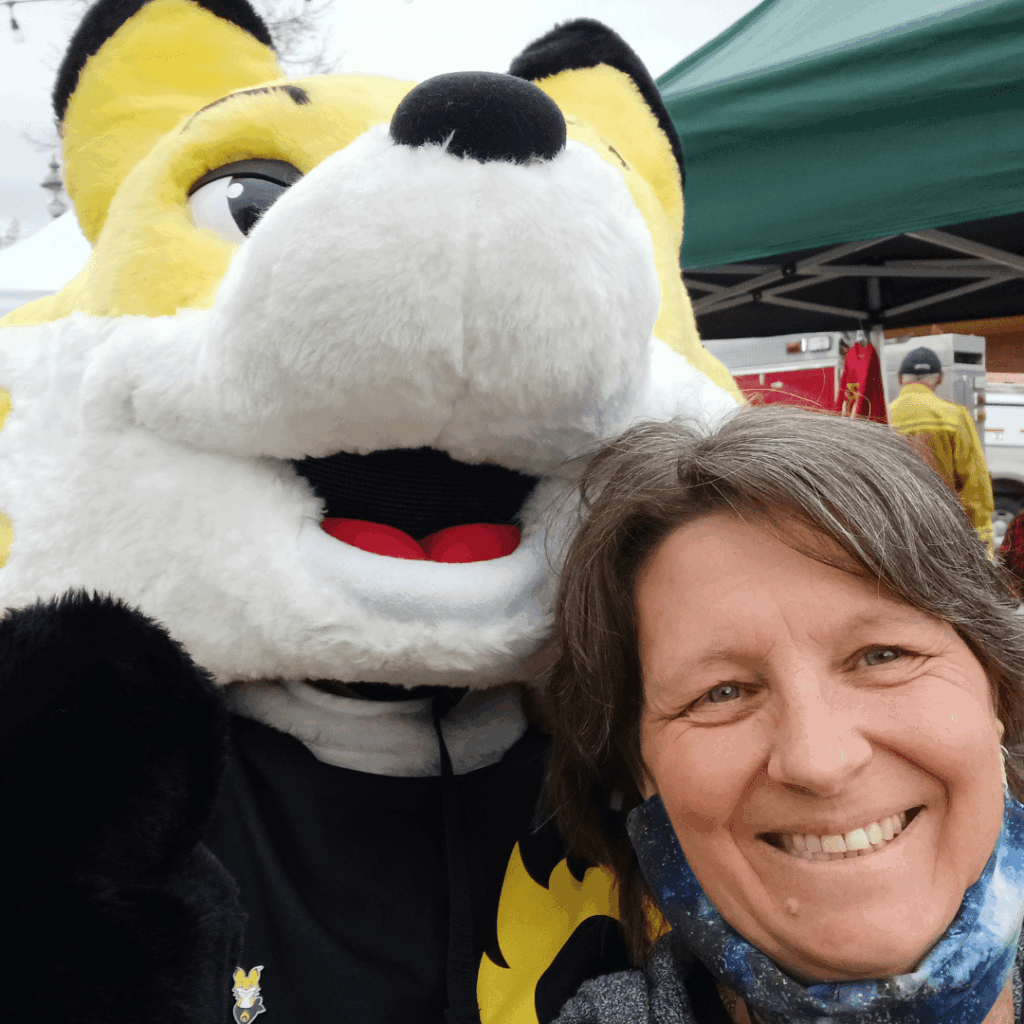
1) Where do you live and what geographical area do you cover?
Near Hedley, I cover RDOS Area G which includes Hedley.
2) How long have you been an LFR?
Since 2022.
3) What made you decide that you wanted to be an LFR and support homeowners and neighbourhoods on how to become FireSmart?
I attended an information session in Hedley and I was very interested in making my own home more resilient. Once I learned more about FireSmart principles, I could see that it was a research based approach that empowered people to make changes on their own; it only made sense to share these ideas with my neighbours. I was also looking for a way to contribute to the community of Hedley as we have felt very welcomed since we moved here.
4) What are your 2 biggest challenges as an LFR?
Our small FireSmart committee has had trouble recruiting new members. We do not currently work with the Hedley Fire Department and it would be better if we could.
We are slowly making inroads into the community but it will take more time.
5) What are some of your successes with the FireSmart program?
I have been in contact with several community groups and the response has been very positive.
The assessments I have completed have been well received. It has been a great way to connect with neighbours and provide them with useful information. In most cases, they have been surprised at the simple steps that can really make a difference.
6) What has been your favourite project/event you have done with your local FireSmart Program?
Our upcoming FireSmart day has been a lot of fun to plan and has allowed me to connect with community members I hadn’t met before.
7) What advice would you give to other LFRs?
Take advantage of new learning experiences and opportunities to connect with other members of the FireSmart community. Stay informed about the research that is ongoing using the resources provided by FireSmart.

1) How long have you been an LFR? Since August 19, 2024.
2) What made you decide that you wanted to be an LFR and support homeowners and neighborhoods on how to become FireSmart? I have a strong passion for wildfire prevention, response, and education. The FireSmart program empowers homeowners and provides a unique opportunity to be part of positive change while working with like-minded individuals and agencies.
3) What are your 2 biggest challenges as an LFR? The large volume of work and projects required from the municipal government side of things and helping homeowners overcome reluctance to make changes on private land.
4) What are some of your successes with the FireSmart program? In a short time, we’ve completed the first prescribed burn in Kamloops in years, launched a neighbourhood recognition program, currently finalizing a rebate program for homeowners, developed the CWRP, and built strong partnerships, while also increasing home assessments.
5) What has been your favourite project/event you have done with your local FireSmart Program? My favourite project has been planning and executing the first prescribed burn in Kamloops in nearly a decade. On March 7, we burned approximately 5 hectares in the Rose Hill area to reduce wildfire risks by cleaning up ground fuels and sage buildup. We have two additional prescribed burns planned for this spring if the weather allows otherwise we will be looking to complete those this fall.
6) What advice would you give to other LFRs? Be patient and persistent; FireSmart work takes time but has lasting impact. Focus on building community relationships, educating homeowners, and empowering them to act on their own.
1) Where do you live and what geographical area do you cover? I live in Port Alberni, on the traditional and unceded territory of the Tseshaht First Nation and cover Tseshaht First Nation reserves. My role focuses on wildfire mitigation efforts across forests, interface zones, and residential areas.
2) How long have you been a WMS? I have been a Wildfire Mitigation Specialist (WMS) for about a year and a half, working closely with TFN and the Alberni-Clayoquot Regional District.
3) What made you decide that you wanted to be a WMS and support homeowners and neighbourhoods on how to become FireSmart? I became a WMS because I saw firsthand the increasing wildfire risks in our region and the need for proactive community engagement. My background in emergency management reinforced my belief that wildfire preparedness must be a shared responsibility. FireSmart provides practical, community-driven solutions, and I wanted to be part of that movement to protect homes, families, and cultural landscapes.
4) What would you say are your two biggest challenges as a WMS?
5) What are some of your successes with the FireSmart program?
6) What has been your favourite project/event you have done with your local FireSmart Program? One of my favorite projects was the wildfire mitigation work at Haahuupayak School, where we collaborated with the school administration to create a safer environment for students and staff. This project involved fuel reduction efforts around the school grounds, including clearing hazardous vegetation and improving defensible space. It was rewarding to contribute to protecting an important cultural and educational space while strengthening wildfire resilience in the community.
7) What advice would you give to other WMSs?
8) What is your favourite aspect of the FireSmart BC website? I appreciate the resources and toolkits available on the FireSmart BC website. The homeowner guides, interactive assessments, and educational videos make it easy to share information and empower residents to take proactive steps toward wildfire resilience. The FireSmart Guide to Landscaping is also a favourite of mine!
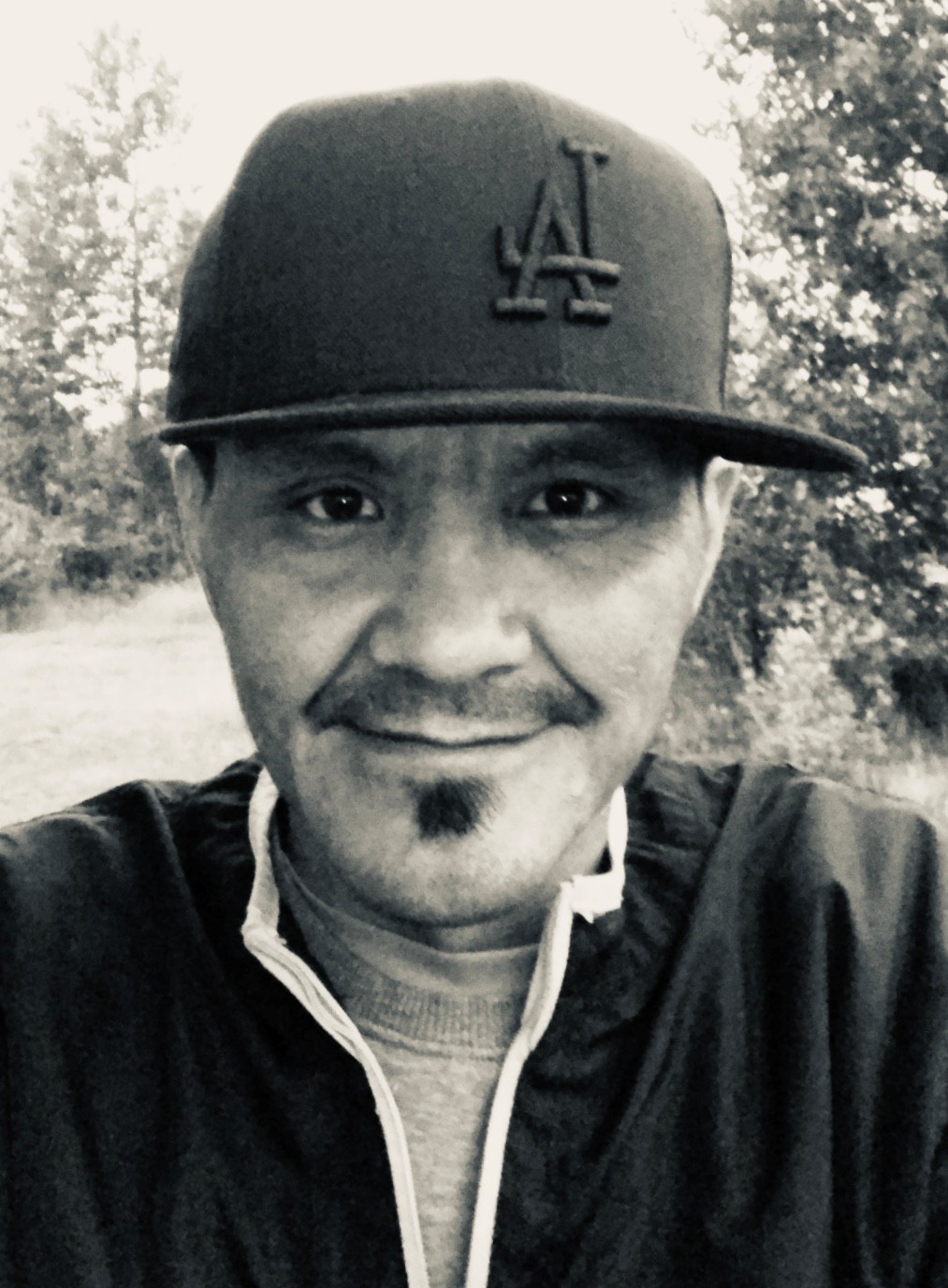
1) How long have you been an LFR? I have had the honor as an LFR for going on 6 months.
2) What are your 2 biggest challenges as an LFR? Winters, and community recognition (support and interest from our local members)
3) What are some of your successes with the FireSmart program? Community Fireguard Joint with our Joint Emergency Operations Team with The District of Fort St James and Nak’azdli Whut’en, as well as community events such as Preparedness day, and Community Showing of the Logan Lake FireSmart Community. I am most proud of my team and how we work together to our community safe, Nak’azdli Whut’en and the District of Fort St James.
4) What has been your favourite project/event you have done with your local FireSmart Program? National Indigenous Public Safety Conference and home fire safety event, where I had the opportunity to learn about Traditional Fire Knowledge. I have had private and public organizations book time in with me to help share FireSmart Safety through our community and surrounding Nations.
5) What advice would you give to other LFRs? Keep Grinding and don’t stop till the job is done. Nak’azdli Whut’en and The District of Fort St James work side by side, and I encourage any organizations to reach out to their Local municipalities and First Nations Government’s and build together to keep communities safe, collaborate and work together as one.

1) Darryl Adrian has 28 years of experience in emergency management, serving with the BCWS, FNESS, MoF, and the Lillooet Tribal Council. As the Emergency Management Coordinator, he facilitates coordination among local, provincial, and federal governments, as well as the six St’at’imc communities. Darryl prioritizes transparent communication, collaboration, and leveraging local resources to enhance emergency preparedness, response, and recovery. He ensures training is accessible to all, including those with learning barriers, fostering community engagement and safe spaces for dialogue.
A wildfire mitigation specialist, Darryl integrates FireSmart practices into communities through the seven disciplines, promoting fire-resilient landscapes and infrastructure. He respects Indigenous knowledge and bridges connections between St’at’imc communities and government stakeholders, strengthening partnerships. His innovative approach includes using technologies like RPAS/UAVs and interactive online dashboards to enhance community resilience and environmental protection.
Known for his humility, integrity, and dedication, Darryl is a trusted leader committed to empowering the communities he serves. Affiliated with the Lillooet Tribal Council, he collaborates with local and provincial agencies, including the District of Lillooet, Regional District, BCWS, MOTI, FireSmart BC, HPP, FNESS, and neighboring nations, ensuring consistent emergency messaging. Darryl’s work exemplifies a lifelong commitment to community safety, resilience, and wildfire mitigation.
2) Where do you live and what geographical area do you cover? I live in Lillooet BC, born and raised in the remote community, Seton Portage. I support all members within the northern St’at’imc territory.
3) How long have you been a WMS? I first completed WMS with Joel, here in Lillooet, June 2023.
4) What made you decide that you wanted to be a WMS and support homeowners and neighbourhoods on how to become FireSmart? As a firefighting responder, travelling the province and across the nation, I learned that a lot of our communities were not properly prepared for emergency situations. The more I saw this over the years, the more I felt like I needed to do something more by sharing my knowledge and experiences and introducing FireSmart practices.
5) What would you say are your 2 biggest challenges as a WMS? Two main challenges include the better understanding of what home insurance companies participated in and what that might look like. The other challenge is trying to convince homeowners and communities to practice FireSmart activities all year and not just during the summer and or when there is a forest fire threatening.
6) What are some of your successes with the FireSmart program? Completing several educational and awareness events, in collaboration with neighboring nations and communities. Completing in school; High School and Elementary School education sharing events, completing an awareness video in collaboration with FNESS, Firesmart BC, District of Lillooet and a community leader. Overall, I feel like in the past 5 years of me in my role, my geographic area members are more aware and educated now and have begun FireSmart activities on their own instead of waiting for a community event.
7) What has been your favourite project/event you have done with your local FireSmart Program? Engaging the youth at the schools and creating the short educational video for me has been the highlight and I cannot wait to do this again. Also, working with FNESS and FireSmart BC, and HPP namely Dan Stevens, Kate Tudoruk, Amanda Reynolds and Ryan and Joel WMS.
8) What advice would you give to other WMSs? Share your experiences, get to know your clients and or community members, hear their stories. Be patient.
9) What is your favourite aspect of the FireSmart BC website? The available resources, including posters and videos, training materials. But also, the FireSmart stories, listening to people’s stories and what they endured and how they overcame their challenges in wildfire mitigation.
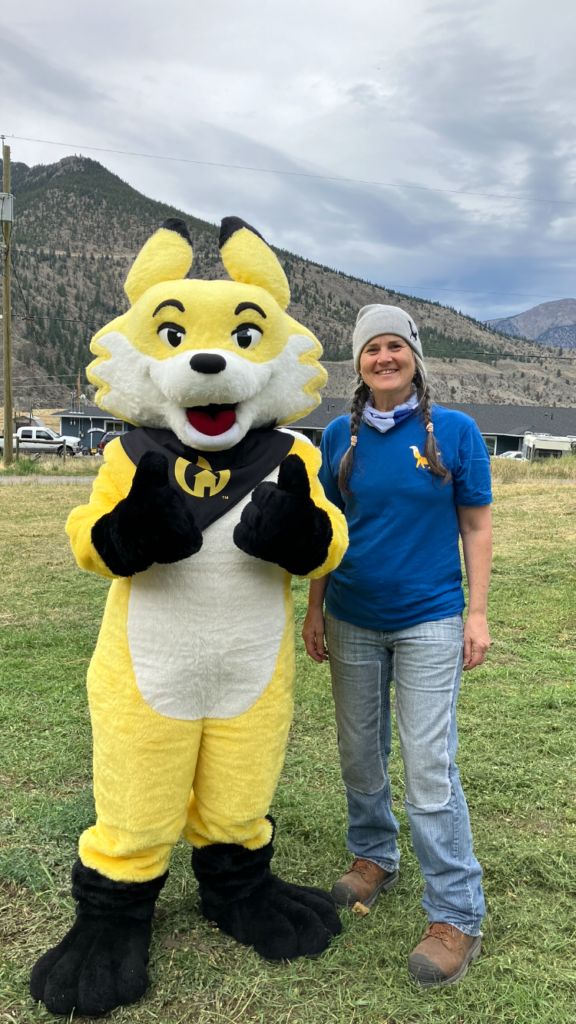
1) Where do you live and what geographical area do you cover? I live in the traditional unceded territory of the upper region of the St’at’imc Nation in the Yalakom Valley. We cover Seton/Shalath, Xwisten, Cayoose Creek Band, Xaxli’p and Pavilion Communities.
2) How long have you been an LFR? Since the summer of 2021.
3) What made you decide that you wanted to be an LFR and support homeowners and neighbourhoods on how to become FireSmart? It was the year that our neighbouring community, Lytton burned and the community I lived in had the McKay Creek Fire lapping on our doorstep. It was a long hot, dry summer and a really scary experience for myself, the elders and for all the surrounding/neighbouring communities and community members. I wanted to know what to do and how to be more FireSmart and to practice and show others how to be better prepared and more resilient to Wildfire.
4) What would you say are your 2 biggest challenges as an LFR ? 1) Sometimes the overwhelm can get a bit much when you look at the big picture. To bring me back in the present moment, I adjust to taking one day at a time and one house/neighbourhood/critical infrastructure assessment at a time. 2) Capacity, limitations and funding for the roles that need to be filled in FireSmart Coordinator roles, Fuel Mitigation roles and FireSmart Crews to make sure the work is being completed and for the management. The hazards, risks, vulnerabilities and unique characteristics of our region when it comes to Wildfire.
5) What are some of your successes with the FireSmart program? Working with 4 out of 5 FireSmart Coordinators in our area. Having community clean up days and FireSmart education events at the local Farmer’s Markets, in our local communities, Schools and Youth Programs. Seeing before and after pictures of some of the FireSmart mitigation work that has been completed in some of our communities and neighbourhoods and seeing homes and structures being transformed from high flammability to low flammability which in turn helps them to be more Wildfire resilient. We had a Youth FireSmart Coordinator for the Summer months of 2024 and we found that very successful reaching out to the Youth and sharing information about FireSmart. In 2023 the SLRD had 3 out of 4 Areas on fire. The day the fires started out in Gun Lake, I was out there completing FireSmart Home Assessments. One of the homeowners wrote to let the SLRD Wildfire Mitigation Specialist to let them know that … having Sharon come out and do our Home Assessment and writing out all the FireSmart recommendations for us to complete saved our home. The homeowners were so grateful. Once they received their rebate funds they in turn gifted their rebate money to Gun Lake Fire that year. Receiving these kinds of emails and feedback makes this kind of work worthwhile and very rewarding.
6) What has been your favourite project/event you have done with your local FireSmart Program? Gosh there have been so many. Off the top of my head it would be … helping and assisting a community have their very first FireSmart education and community clean up day. We had FireSmart and FNESS present at the event as well as The Lillooet Tribal Council. A neighbouring community brought over their FireSmart Mitigation Crew to help out. There was a FireSmart information tent, door prizes, giveaways, lunch was provided and even Ember the FireSmart mascot turned up for the occasion. You know it’s a successful event when the bins are full to the brim. The community saw how successful the event was and had another FireSmart clean up day the next month as well. Most importantly the role I have now which is the FireSmart Coordinator for the Lillooet Tribal Council. We are working with and are there for support to 4 out of 6 FireSmart Coordinators in our Nation.
7) What advice would you give to other LFR’s? Take one day at a time, one home, neighbourhood and critical infrastructure assessment at a time. Ask for help when you need it. Reach out, meet with other LFR’s and FireSmart Coordinators to brainstorm to discuss what’s working for them, what’s not working for them. Come up with plans, goals, objectives. Stay connected. There are a lot of resources out there now. Attend the Wildfire Summits that are held every year. This is a great opportunity to learn and to network with professionals in the Wildfire/FireSmart industry. Sign up for FireSmart BC and FireSmart Canada’s monthly newsletters. If you have an intense fire season, take some time for you, rest, reset your nervous system and talk about any hardships you may have had with someone you trust and feel safe around. Wildfire fatigue is a thing! Have Fun !

1) Where do you live and what geographical area do you cover? I’m based in Trail, located in Southeast B.C., where I oversee the FireSmart Program across seven municipalities and five electoral areas within the Regional District of Kootenay Boundary (RDKB).
2) How long have you been a WMS I currently work as the Emergency Program and FireSmart Coordinator for the RDKB and have been a WMS for 3 years.
3) What made you decide that you wanted to be a WMS and support homeowners and neighbourhoods on how to become FireSmart? Having grown up in British Columbia, I’ve seen the growing threat of wildfires firsthand. My initial introduction to FireSmart was back in 2017 when I worked with a Structure Protection Crew at the Elephant Hill fire. Witnessing the destruction caused by the wildfires was a real eye-opener. That experience fueled my desire to protect our beautiful landscapes and communities. There’s a strong community-driven spirit here, and the opportunity to educate and empower homeowners aligns perfectly with my passion for public safety and environmental stewardship.
4) What would you say are your 2 biggest challenges as a WMS? Engagement and Education: It’s sometimes challenging to engage homeowners who are either unaware or skeptical of the wildfire risks. More specifically large private or commercial landowners who are difficult to reach and/or may not have the resources to mitigate the risks, reduce the fuels on their land or feel it is their responsibility to do so. Resource Allocation: With limited resources, prioritizing areas that need the most help can be difficult and requires strategic planning.
5) What are some of your successes with the FireSmart program? My amazing team! We’ve been incredibly fortunate to have passionate and dedicated champions of FireSmart. With a team of only 3 WMS over our large geographic region, we completed over 600 WMP assessments and attended over 100 community events in the last 2 years. We’ve increased community participation significantly, with more residents receiving home assessments, and the recent launch of our residential rebate program has increased proactivity for their mitigation efforts. The establishment of our Community FireSmart and Resiliency Committee (CFRC) emphasizes that FireSmart is a shared responsibility. Everyone involved—committee members, provincial and local partners, senior management, and elected officials—plays a crucial role in building a wildfire-resilient community. Managing a regional CFRC results in a diverse and extensive group, which provides a platform to collaborate, exchange ideas, and share insights effectively. Although the table can get a little large at times this collective effort enhances our capacity to develop strategies that address the unique wildfire challenges faced by our communities.
6) What has been your favourite project/event you have done with your local FireSmart Program? Being a regional FireSmart Coordinator (FSC), it’s tough to pick just one favourite project or event, but a few really stand out. One highlight was co-hosting a big community clean-up at Big White this past summer. We teamed up with the local fire department, Big White Resort staff, local businesses, FireSmart BC, Site Partners, and BCWS for a community-wide clean-up and chipping event, plus a FireSmart and Emergency Preparedness workshop. The resident turnout and enthusiasm were super rewarding. Another was launching the province’s first FireSmart on Wheels Trailer. This trailer aids our WMS in educating community members about wildfire preparedness and boosts our FireSmart efforts in schools and communities. Finally, making our RDKB FireSmart Video in 2022 was a blast. I was thrilled with the final product—even though it was a ton of work, it was a fun project to be involved in.
7) What advice would you give to other WMSs? Build strong relationships with community leaders, and neighbouring FireSmart Programs (FSC, WMS, LFRs)—they’re invaluable allies. Keep an open mind and share your successes and challenges; each community is unique, get to know the people in the communities you represent, understand their needs, and the best way to engage with them. We all have different challenges and demographics, but we share a common goal, don’t be afraid to think outside the box. Secondly, stay patient and persistent; change in perception and behaviour around wildfire risk doesn’t happen overnight, but every bit of progress is significant.
8) What is your favourite aspect of the FireSmart BC website? The comprehensive resources available, from assessment tools to informative guides, make it an amazing resource for both specialists and residents seeking to improve their wildfire readiness. More specifically, I would have to say the Landscaping Hub and the community success stories section are inspiring and emphasize the impact of the FireSmart program initiatives across our province.

1. Where do you live and what geographical area do you cover? I live in Pritchard, I cover mostly the Pritchard and Monte Creek areas.
2. How long have you been an LFR? I have been an LFR since May 2024.
3. What made you decide that you wanted to be an LFR and support homeowners and neighbourhoods on how to become FireSmart?I decided to become an LFR as I have been involved with fire education for many years. Pritchard Fire had already been doing FireSmart assessments for approximately 11/2 years when the opportunity came up for us to become certified LFRs. Pritchard has a fire rating of 1 with Wildfire BC which is extreme. I knew that if we were to save homes in our community Fire education was critical. The only way to achieve this goal was educating our community and the residents with the knowledge of FireSmart. In 2023 I was deployed on the Bush Creek Fire. Most of the homes that were lost had no FireSmart, and no property mitigation. The majority of the homes that were saved were FireSmarted with the aid of structural protection. Bottom line, FireSmart Works!!
4. What would you say are your 2 biggest challenges as an LFR ? I decided to become an LFR as I have been involved with fire education for many years. Pritchard Fire had already been doing FireSmart assessments for approximately 11/2 years when the opportunity came up for us to become certified LFRs. Pritchard has a fire rating of 1 with Wildfire BC which is extreme. I knew that if we were to save homes in our community Fire education was critical. The only way to achieve this goal was educating our community and the residents with the knowledge of FireSmart. In 2023 I was deployed on the Bush Creek Fire. Most of the homes that were lost had no FireSmart, and no property mitigation. The majority of the homes that were saved were FireSmarted with the aid of structural protection. Bottom line, FireSmart Works!!
5. What are some of your successes with the FireSmart program? T I would say that my biggest successes are educating home owners on FireSmart and doing the assessment. Then doing a follow up reassessment at the home owners request. Walking the home and property with them, you can see and feel the enthusiasm. That makes me smile to know we are doing our job!
6. What has been your favourite project/event you have done with your local FireSmart Program? My favorite project and event was FireSmarting 40plus Modular homes at Country View Estates.
On July 22nd Pritchard and Monte Creek Fire received a page out to a structure fire at Country View. When we arrived on scene 2 structures were fully engulfed. The cedars that acted as a privacy fence between the modulars were also on fire as well as the junipers out front. The radiant heat from the fires was close to igniting the homes on the left and right of the burning structures. We knocked down the cedars and junipers and continued exposure protection on the homes that were saveable. During the mop up phase my Fire Chief Mark Corey introduced me to the park Caretaker as the FireSmart rep for our Dept. We had a brief discussion about FireSmart and we exchanged numbers to talk at a later date. I contacted Kim McMillan, our Lead FireSmart Coordinator for the TNRD. We talked about the necessity to FireSmart these properties. After much discussion and Emails with Country View we set up a community meeting in the 2nd week of Sept 2024 at Country View Estates. We were presented with lots of questions supporting them with many answers. To date we have completed over 40 FireSmart assessments. In the spring of 2025 we will further be supporting them with a tree chipping service and ongoing FireSmart education.
7. What advice would you give to other LFR’s?
Any advice I can give to other LFRS would be to continue to further your FireSmart knowledge through their website and literature. As well as look to see what other Fire Departments are doing to educate their communities. Perhaps you can work with some of their information and work it into your weekly FireSmart Departments page. After all, we are all on the same team. Good Luck, keep safe.
1. Where do you live and what geographical area do you cover? I live in Nelson, BC and work as the Wildfire Resilience Program Coordinator for the City of Nelson.
2. How long have you been an LFR? I’m not an LFR, although I started as a FireSmart Coordinator in spring of 2023, so about a year and a half.
3. What made you decide that you wanted to be an LFR and support homeowners and neighbourhoods on how to become FireSmart?I previously worked in wildfire response and saw first-hand the effects that wildfire can have on communities. Seeing some homes lost while others were left standing really showed me that there’s value in the work being done from a prevention side as well. When the opportunity came up to do that work within my own community, it seemed like a good fit.
4. What would you say are your 2 biggest challenges as an LFR ? For one, I sometimes find it challenging to constructively engage with folks who hold strong opinions that don’t quite align with the science or data that you can encounter when doing public outreach or events. It’s great to see people so interested in the subject, but it’s clear that we still have a lot of work to do in spreading the right information. I think the second biggest challenge is navigating the administrative hurtles that can turn simple ideas into much bigger projects in terms of permits and approvals.
5. What are some of your successes with the FireSmart program? I have gotten a lot of work done over the summer preparing a majority of the homes on loop road a road that was most at risk from the john brown creek fire in august of 2023.
6. What has been your favourite project/event you have done with your local FireSmart Program? This summer we hosted a Wildfire Risk Reduction street party. We had representatives from a bunch of local agencies, games booths, live music, and a BBQ hosted by the fire department. Despite the 40 degree heat this year, it was still a great time with lots of folks stopping in to learn about FireSmart.
7. What advice would you give to other LFR’s? Don’t hesitate to try new things. The year for example, we decided to contract this remote-operated forestry machine to do a fuel treatment in one of parks within the city. It took some back and forth to figure out how to make it happen, but it’s ended up generating a lot of interest and provided new media opportunities to speak about the FireSmart program. As well, I’d say It’s worthwhile to just reach out to other folks in the broader network of this industry to ask for help in figuring out how to do things. The program is growing and changing every year and we have an opportunity to help it evolve; but that means doing things we haven’t necessarily done before.
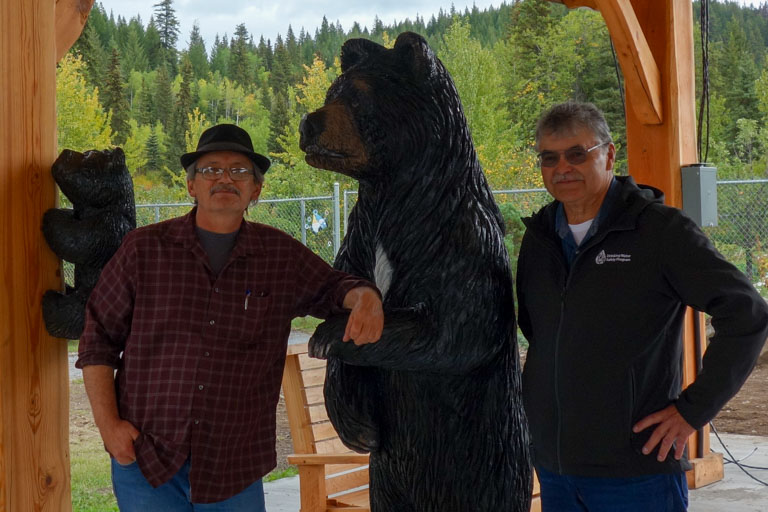
1. Where do you live and what geographical area do you cover?
Ed: I live in Fraser Lake and work at Stellat’en First Nation.
Peter: I live in Stella and am responsible for Stellaquo IR#1.
2. How long have you been an LFR?
Ed: I am not a certified LFR. Currently awaiting an opportunity to take the course and become certified.
I have been working for Stellat’en First Nation as their FireSmart Coordinator for 6 months and their
Emergency Services Coordinator for 2 years.
Peter: I have been doing firesmarting work for over 30 years. However, I am not a certified LFR.
3. What made you decide that you wanted to be an LFR and support homeowners and neighbourhoods on how to become FireSmart?
Ed: The strong demonstrated need in the community, the recognition of the importance of this issue to the
community, a request from Chief and Council to fulfill the role, and an interest in the topic.
Peter: I wanted to reduce the risk of wild fires having an impact on our community.
4. What would you say are your 2 biggest challenges as an LFR ?
Ed: Continuity of funding for OFT and other fuel mitigation work that needs to be done. This lack of continuity increases complexity for program delivery and negatively, and significantly, impacts crew retention.The residents who are uninterested in FireSmarting best-practises and that put their neighbours houses at increased risk.
Peter: Getting people to reduce the fire risks on their properties of their own accord. Making sure I have the funds to do the work that is needed.
5. What are some of your successes with the FireSmart program?
Ed: The completion of the Stellat’en First Nation CWRP. The completion of the ISC/FNESS FireSmart program for the 30 houses in the community that are in the WUI. The successful completion of a MTSA for Fire Protection Agreement with the Municipality of Fraser Lake
Fire Department. The partnerships and inter-agency relationships that have been developed and that have resulted in an
increased fire response and prevention capability.
Peter: Wide-spread community firesmart landscaping. Education of community members and government officials; and the recording of the effort over the years via photography.
6. What has been your favourite project/event you have done with your local FireSmart Program?
Ed: The development and completion of the MTSA for Fire Protection Agreement with the Municipality of
Fraser Lake Fire Department. Also, the firesmarting work I have done with Peter Luggi that compliments
the amazing work he has done in the community over the last 30+ years.
Peter: I have been doing firesmarting work for over 30 years. However, I am not a certified LFR.
7. What advice would you give to other LFR’s?
Ed: Identify gaps in the big-picture for fire prevention in your community. Are you in a Fire Protected Area?
How can you get into a Fire Protected Area? Can you partner with a neighbouring fire department? Do
you need to develop your own fire department? Talk to the people in your community one-on-one as much as possible. Folks are generally interested in
protecting their homes from catastrophic loss so if your approach is pleasant, non-demanding, and you
present a willingness to assist with mitigation work that the homeowner might want to do, then you
should be in a position to obtain meaningful results.
Peter: Recognize the risks in your community and surrounding areas and work on them as is possible. Landscape firesmarting is a good way to go. Plant grass, remove combustible materials and help keep the homes in your community free of debris, tires, woodpiles, etc as per the FireSmart recommendations.
8. What is your favourite of aspect of the FireSmart BC website ?
Ed: The materials that are freely available for use for community information dispersal and events/public
meeting presentations. The body of information is without doubt a useful resource.
Peter: I rarely look at the website. That, among other reasons, is why I enjoy working with Ed. He looks after these sorts of things. I concentrate on getting the physical work done in the community.

1. Where do you live and what geographical area do you cover? I work within the Village of Kaslo year round and partner with the Regional District of Central Kootenay to facilitate FireSmart Programming in the surrounding area seasonally from May to October.
2. How long have you been an LFR? What made you decide that you wanted to be an LFR and support homeowners and neighbourhoods on how to become FireSmart.
3. What made you decide that you wanted to be an LFR and support homeowners and neighbourhoods on how to become FireSmart? It feels good to engage proactively in my community on issues and challenges around wildland urban interface fires and community resilience.
4. What would you say are your 2 biggest challenges as an LFR ? Capacity is definitely my biggest challenge. So much that could be done, not enough hours in the week!
5. What are some of your successes with the FireSmart program? Relationship building and interagency cooperation. I am very fortunate to work closely with the Kaslo Volunteer Fire Department, Kaslo & District Community Forest, Kaslo & Area D Emergency Support Services, several neighbourhood champions, and partner regularly with local trail groups, businesses, the senior’s association, local media and others.
Being rooted in this community has been an enormous asset in the way that I can do my job. People often ask me about FireSmart or book a home assessment at the post office or grocery store. I had someone talk FireSmart with me on the bench at hockey last week!
I have been very fortunate to step in and continue the momentum from folks that have been pioneering FireSmart in the community for years and decades before me.
6. What has been your favourite project/event you have done with your local FireSmart Program? There’s lots! I was at a market last weekend with the Wildsight Youth Climate Corps and it was amazing to see the youth crew engage on FireSmart and emergency preparedness. Hearing about the workshops and information sessions that they had put on throughout the regional district this summer really inspired me! It was great for me to absorb some fresh energy and ideas from the youth crew.
7. What advice would you give to other LFR’s? Collaborating with other agencies and organizations has been a valuable strategy for me. Have some fun and do what makes sense in your community!
8. What is your favourite of aspect of the FireSmart BC website? My favourite aspect of the FireSmart BC Website is the LFR den – so many good resources!
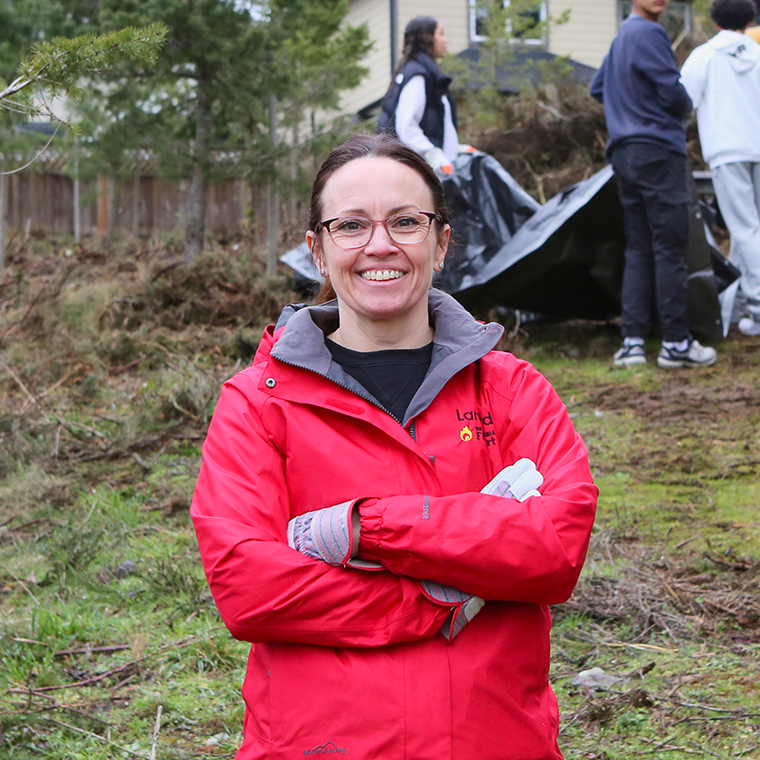
1. Where do you live and what geographical area do you cover? Langford, BC – Southern Vancouver Island
2. How long have you been an LFR? 10 months.
3. What made you decide that you wanted to be an LFR and support homeowners and neighbourhoods on how to become FireSmart?During my 15-year career as a 911 dispatcher for the fire service, I have been the first point of contact for individuals experiencing emergencies. This role has involved me in the response and recovery aspects of emergency incidents. While this work has been incredibly rewarding, I am now excited to engage directly with the community to promote prevention, preparedness, and resilience.
Educating homeowners and neighborhoods on how to become FireSmart aligns with my passion for proactive community safety. I believe that knowledge is power, and that encouragement can significantly enhance public safety efforts. This new role represents a natural progression in my fire service career, allowing me to contribute to the community where I live by empowering residents to take responsibility for their own safety.
4. What would you say are your 2 biggest challenges as an LFR ? One of the primary challenges I have encountered is the general lack of awareness about the FireSmart BC program and its benefits. Additionally, although our community has experienced significant smoke impacts from wildfires in recent years, we have not faced major wildfires. This lack of direct experience makes it difficult for residents to understand that wildfires can occur anywhere in BC, including our community.
5. What are some of your successes with the FireSmart program? Some successes with the FireSmart program include holding public information sessions to inform residents in high-risk areas about wildfire safety and distributing the FireSmart Begins at Home guide. At Belmont High School, we gave presentations on FireSmart principles to outdoor education classes and organized a community clean-up event with students to reduce wildfire risks on school property. We offered curbside debris pick-up, removing a total of 140 yards of chipped debris from high-risk neighborhoods. We also hosted various FireSmart events and community clean-ups in city parks. Additionally, we initiated the Greater Victoria Community FireSmart Resiliency Committee to promote regional collaboration and introduced the FireSmart Plant Program at Buckerfields in Langford to educate the community on fire-resistant plants.
6. What has been your favourite project/event you have done with your local FireSmart Program? I had the privilege of supporting the Thetis Heights neighborhood in hosting a Wildfire Preparedness Day event at their local park. The event featured participation from Langford Fire Rescue, Langford Emergency Support Services, Broken Promises Pet Rescue, teachers and students from Millstream Elementary School, student volunteers from Royal Bay Secondary School, resident volunteers from Thetis Heights, and The Co-operators. This event was spearheaded by their neighborhood champion, Anne Pokocky, whose unwavering commitment to community safety was incredibly inspiring. I was honored to be a part of it all.
7. What advice would you give to other LFR’s? Don’t worry about things beyond your control. Instead, focus on helping and connecting with the people in your community.
8. What is your favourite of aspect of the FireSmart BC website ?To be honest, I use the FireSmart BC website daily for a variety of purposes. It’s difficult to choose just one aspect, as it offers a wealth of information.
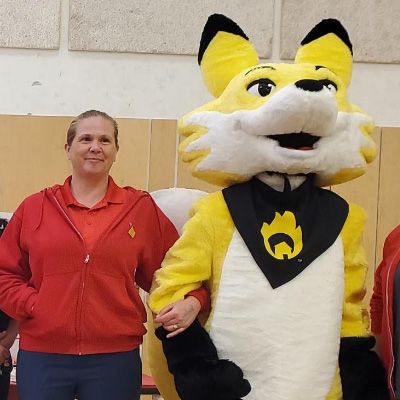
1. Where do you live and what geographical area do you cover? Leq’a:mel First Nation is in the Fraser Valley, Deroche BC.
2. How long have you been an LFR? Not long but I am very passionate about the FireSmart Program, and helping our community become resilient and mitigate the risks associated with forest Fires.
3. What made you decide that you wanted to be an LFR and support homeowners and neighbourhoods on how to become FireSmart? Climate change impacts such as drought have created tinder dry conditions causing the threat of forest fires for all communities. Action needs to be taken to ensure education, awareness and mitigation practises occur.
4. What would you say are your 2 biggest challenges as an LFR ? My two biggest challenges, knowing that all our homes won’t be mitigated this year in our community and really hoping to host a Youth FireSmart Fair where we can reach the children with FireSmart education. This year has the potential to be a bad year, I want to do everything I can to prepare our community.
5. What are some of your successes with the FireSmart program? 1. Mitigating 25 Elders homes on Reserve
2. Attending the Prince George Wildfire Summit
3. Having the FNESS Team support through out the entire process
4. Attending 5 FireSmart Fairs highlighting our communities progress and seeing other communities’ successes.
6. What has been your favourite project/event you have done with your local FireSmart Program? Leq’a:mel FireSmart Fair June 7, 2024, 143 community members attended and really got to know the FireSmart Program.
7. What advice would you give to other LFR’s? One house, one community at a time is all it takes to make an impact, being a LFR is a privilege, honor and knowing I’m apart of a much larger FireSmart team that supports each other each step of the way is absolutely amazing!
8. What is your favourite of aspect of the FireSmart BC website ?Resources are my favorite aspect of the website and I utilize them daily, I don’t have to have all the answers, when I can easily locate them online.
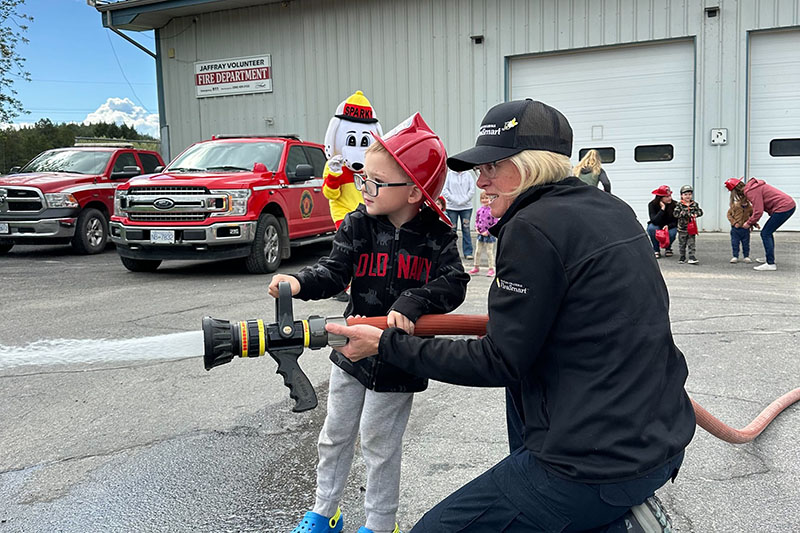
1. Where do you live and what geographical area do you cover? I live in Baynes Lake in the East Kootenays. I am responsible for the Regional District of East Kootenay electoral areas A & B, otherwise known as The Elk Valley and South Country.
2. How long have you been an LFR? I have been an LFR since the spring of 2023
3. What made you decide that you wanted to be an LFR and support homeowners and neighbourhoods on how to become FireSmart?The decision to become an LFR was an easy one, as my work and life experience up to this point consisted of managing an exterior finishing company, running my own landscaping company, and being a passionate member of my local fire department, with a special interest in wildland firefighting. In depth knowledge of these areas has allowed me to better assist homeowners and neighbourhoods on their FireSmart journeys.
4. What would you say are your 2 biggest challenges as an LFR ? One of my initial challenges was gaining and building trust within my Electoral Areas. Through extensive outreach and consistent community involvement, I was able to create relationships that better helped me move the program forward.
Helping homeowners keep focus on the Home Ignition Zones can be challenging. It’s important to look at what can be done on their own properties, and some people spend time and energy looking at things that need to be done in neighbouring yards and other community spaces.
5. What are some of your successes with the FireSmart program? As I mentioned above, building relationships can be challenging but I believe I have had great success in making those connections and gaining the trust of residents within my area.
The Neighbourhood Recognition Program has been my focus and I currently have over 20 engaged communities, with more joining every day.
6. What has been your favourite project/event you have done with your local FireSmart Program? My favourite project has been our first annual Ember Stomp, a Wildfire Community Preparedness Day event, that was hosted in Jaffray. I was able to bring together multiple agencies, including FireSmart BC – Landscaping Expert, Carla Hoffman, BC Wildfire, BC Ministry of Forests – Wildfire Risk Reduction, Vahana Goats and BC Cattlemen’s Association – Targeted Grazing Projects, and over a dozen more, to provide wildfire preparedness information as well as conservation and mitigation outreach to the public.
7. What advice would you give to other LFR’s? No event is too small to attend. Some of the most engaged residents I have found have been at a pancake breakfast or quilting club meeting. Creating opportunities to have meaningful one-on-one conversations has been key.
8. What is your favourite of aspect of the FireSmart BC website ?I appreciate the easy access to great resources and educational videos that I can share with my residents.
1. Where do you live and what geographical area do you cover? I live in xwesam/Roberts Creek, we cover the Squamish Nation Stelḵáya through shishalh Nation Swiya (the Sunshine Coast). Port Mellon to Egmont and the Island Communities.
2. How long have you been an LFR? I have been a volunteer LFR since 2020, and in the FireSmart Coordinator role since July of 2023.
3. What made you decide that you wanted to be an LFR and support homeowners and neighbourhoods on how to become FireSmart?It was an opportunity to work more on the proactive side of Firefighting, as a structural Firefighter we always respond to situations, this is a very empowering side of the coin. The fact that when our pager goes off, it means that someone is having a crummy day, our job is to try and make it just a little bit better, with the FireSmart Program we get to empower people, it always seems to be a powerful uplifting experience.
4. What would you say are your 2 biggest challenges as an LFR ? The number one challenge is getting people to realize that the landscaping practices we used to utilize in a new build, or around existing buildings are no longer practical, or safe. The second challenge is getting the message out that while we say we like to live in a natural setting, or natural forest, what we see now is not natural. There have been too many human influences that have moved these settings from a natural setting and left an incredible amount of fuel on the forest floor.
5. What are some of your successes with the FireSmart program? I believe our biggest success has been in the Public Outreach portion of our program, there has been lots of good feedback, and appreciation of what our FireSmart Team is accomplishing. Our team is made up of dedicated individuals that are deeply passionate about the FireSmart program. There has been a lot of great interaction with our local Churches, Community Association, Service Clubs, etc. Every time we are at an event it creates a demand for FireSmart Homeowner Assessments, which in turn creates a local FireSmart Champion, usually followed up with a Community Wildfire Risk Assessment, and then a presentation to the community.
6. What has been your favourite project/event you have done with your local FireSmart Program? There have been a lot of really great events, we are quite young in the development of our program, and we are just starting to make headway in Wildfire Preparedness Days and FireSmart Days. I would have to say that the two that stand out would be the Girl Guides Program with Camp Olave, and the work with our Gambier Island Community Associations.
7. What advice would you give to other LFR’s? Get out there, be at every possible community event, utilize your community contacts. Know that every single event you attend will generate FireSmart Homeowner Assessments. Even if it is just one request, it is one more than you had going into the event, and the word will soon spread, and continue to spread. Focus on the brand awareness and FireSmart will become more and more of a household name.
8. What is your favourite of aspect of the FireSmart BC website ?Hands down the Landscaping Hub, in particular the Fire-Resistant Plants, and the Low-Risk Plants for Hedges. We always get asked about these, it is easy to point out what shouldn’t be in the Immediate Zone and the Intermediate Zone, but we provide positive options. Both of which we send out with each assessment done.
1. Where do you live and what geographical area do you cover? I live in Witset BC, a small reserve just a 20-minute drive north of Smithers BC. Our district is under the Kitimat-Stikine Regional District.
2. How long have you been an LFR? Have been an LFR since the end of July of 2023.
3. What made you decide that you wanted to be an LFR and support homeowners and neighbourhoods on how to become FireSmart?Being the FireSmart Coordinator of Witset First Nation I feel like it’s a crucial part of my job, and I love helping our community.
4. What would you say are your 2 biggest challenges as an LFR ? My biggest Challenges is getting home owners to cooperate and to understand the benefits of simple easy wins like home/yard maintenance, or moving hazardous flammable materials away from a structure. Most are cooperative.
5. What are some of your successes with the FireSmart program? I have gotten a lot of work done over the summer preparing a majority of the homes on loop road a road that was most at risk from the john brown creek fire in august of 2023.
6. What has been your favourite project/event you have done with your local FireSmart Program? Working with our worker bee crew and being called to the EOC as a risk management officer. And also doing fuel removal on properties that where at most risk to the john brown creek fire. Also Working with neighbouring fire departments, FNESS and FNHA.
7. What advice would you give to other LFR’s? Just remember, things take time. In due time people will listen.
8. What is your favourite of aspect of the FireSmart BC website ?I love how many free resources the website provides and how easy it is to navigate.

1. Where do you live and what geographical area do you cover? I live in Christina Lake. The areas I covered were Christina Lake, Grand Forks and Greenwood. Occasionally doing an assessment in Trail, Fruitvale and Bridesville.
2. How long have you been an LFR? 2023 was my first year as an LFR.
3. What made you decide that you wanted to be an LFR and support homeowners and neighbourhoods on how to become FireSmart?I was fairly new to the community and with a background in Health and Safety and being part of Christina Lake Fire Hall, this seemed like a great opportunity to use my skills and meet people in the area. Going to markets and meeting homeowners was a great way to meet people and get to know the area I live in.
4. What would you say are your 2 biggest challenges as an LFR ? 1. Organising time to write up assessments as there was a lot of uptake in the area and I was completing two assessments a day for most of the season. 2. Doing home assessments when the homeowners weren’t around (with their permission of course) as neighbours would come and wonder who I was and what I was up to. It always ended well with more opportunity to spread the word about FireSmart and it’s good to see a good community with people watching out for one another.
5. What are some of your successes with the FireSmart program? The huge uptake. Doing around 140 assessments in the 2023 season when I aimed for around 100, felt like a great success for my community. I met wonderful people and saw amazing properties in the area. I really got to explore the Kootenay Boundary.
6. What has been your favourite project/event you have done with your local FireSmart Program? The farmers markets were great. The Big Effort Swim event with the FireSmart tent set up on the beach was awesome. My favourite event was probably Canada Day at the Museum in Grand Forks. There was a lot of excitement and uptake for the program. However, Founders Day in Greenwood was also super busy with lots of interest and it was big success for sign ups and giving out information too.
7. What advice would you give to other LFR’s? Plan ahead for admin time. Keep in touch with peers as they are a great resource as this job is remote and not in an office surrounded by people. Plan to be 5-10 minutes early for assessments as some properties can take a little extra time to locate. Plan events together with other LFR’s as events with two people are much easier to manage.
8. What is your favourite of aspect of the FireSmart BC website ? I love the stories of Ember and her adventures. There are some great resources such as free training too. It’s good that all of this is available.
1. Where do you live and what geographical area do you cover? I live in Lillooet B.C. and I cover (Xwisten)Bridge River Band Community Reserve.
2. How long have you been an LFR? I’ve been since summer of 2023.
3. What made you decide that you wanted to be an LFR and support homeowners and neighbourhoods on how to become FireSmart? I’ve been working Fuel Management for 10 years for Bridge River band and FireSmart Coordinator position caught my interest to help community of Bridge river band on how to FireSmart their homes during wildfire season.
4. What would you say are your 2 biggest challenges as an LFR ? In the beginning of my LFR learning process I found public speaking was overwhelming, but I managed to get through it to accomplish and succeed. It also can be a challenge to see people in the community that have way too much personal items stored around their homes and its never to late to down size their property.
5. What are some of your successes with the FireSmart program? I can’t take all the credit but with the help of my LFR mentor, helping me complete community home assessments.
6. What has been your favourite project/event you have done with your local FireSmart Program? My favourite event would be first community education firesmart event that was a good turn out.
7. What advice would you give to other LFR’s? Get lots of support from local businesses for your Firesmart event door prizes for the kids and adults.
8. What is your favourite of aspect of the FireSmart BC website ? Watching video webinars and other video’s as well.
1. Where do you live and what geographical area do you cover? I live in Metchosin and am the FireSmart Coordinator for the district of Metchosin.
2. How long have you been an LFR? I have been an LFR since the summer of 2021.
3. What made you decide that you wanted to be an LFR and support homeowners and neighbourhoods on how to become FireSmart?-I have been a structural firefighter for 6 years with the Metchosin Fire Department and had the opportunity to deploy to the wildfires in 2021. This sparked my interest in the wildfire side of firefighting and made me eager to spread the knowledge of FireSmart through our community here in Metchosin.
4. What would you say are your 2 biggest challenges as an LFR ? I find residents can get overwhelmed with the amount of work that needs to be done to make their property truly FireSmart. It can often be a challenge for homeowners to understand that this is a gradual process that doesn’t all have to be completed immediately. We especially see challenges with helping seniors, who often can’t do the work themselves. The rebates offered through FireSmart are a huge help along with being able to offer mitigation assistance with our 2024 grant!
5. What are some of your successes with the FireSmart program? Our FireSmart program has found huge success in our community chipping program. We offer neighbourhood chipping days along with providing a drop off chipping pile that can be accessed at any time.
6. What has been your favourite project/event you have done with your local FireSmart Program? Our FireSmart program has found huge success in our community chipping program. We offer neighbourhood chipping days along with providing a drop off chipping pile that can be accessed at any time.
7. What advice would you give to other LFR’s? Be patient, community involvement doesn’t happen overnight.
8. What is your favourite of aspect of the FireSmart BC website ? FireSmart Landscape Hub! The fire-resistant plant tool is a great easy resource to use, it gives the home owners lots of safer plant options to choose from.
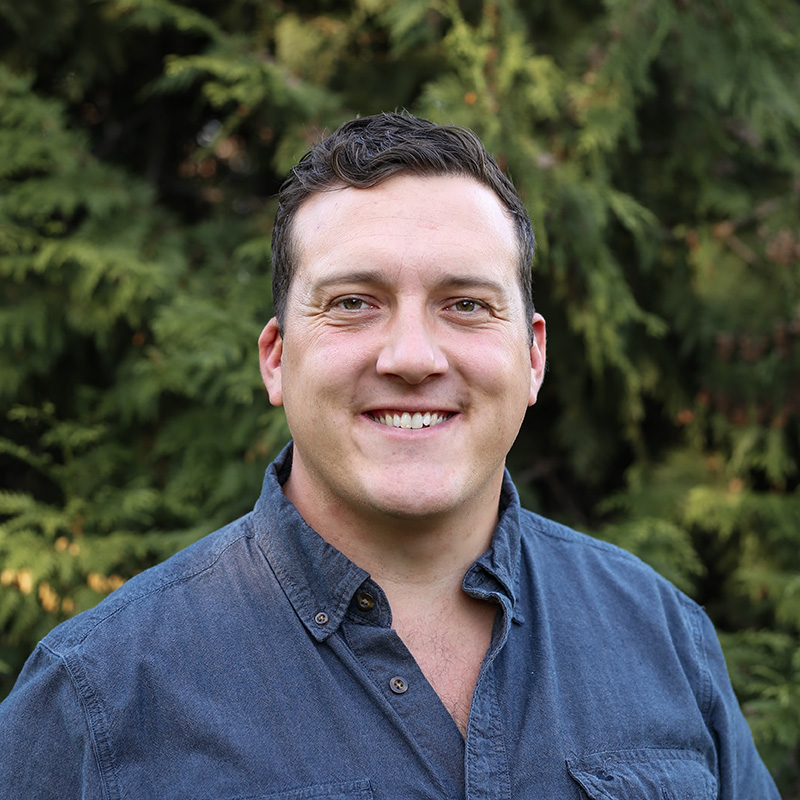
1. Where do you live and what geographical area do you cover? I live in Kelowna, and work for the City of West Kelowna as the Wildfire Prevention Specialist/FireSmart Coordinator.
2. How long have you been an LFR? I have been an LFR since the Spring of 2022.
3. What made you decide that you wanted to be an LFR and support homeowners and neighbourhoods on how to become FireSmart?I worked on a Unit Crew with BC Wildfire for several years and had made the move to the Wildfire Risk Reduction Program with the Ministry of Forests to focus on prevention rather than suppression. Becoming an LFR was an excellent wat to get further involved with Wildfire Prevention and supporting change at a grassroots level.
4. What would you say are your 2 biggest challenges as an LFR ? Helping people focus on what’s within their control. People are passionate about fire, emotions can get high and its easy to point fingers at the neighbors yard. using FireSmart to educate people on the small things they can do to make big differences is really rewarding. Shifting the focus from others to those little tasks that are within the homeowner’s sphere of control can be challenging.
5. What are some of your successes with the FireSmart program? We have been offering the rebate program in West Kelowna for a few years. This year I did a HIZ assessment on a home in early August. The Homeowner immediately started working on some of the recommendations. we were impacted by the McDougall Creek Wildfire just a week later. The homeowners home survived, while others in the neighborhood had not. She called to thank the FireSmart Team here in West Kelowna and that conversation was really special. Seeing the FireSmart program in action and seeing the outcome it can have during an event of that magnitude was really cool.
In general, we have a great FireSmart Family Day and Local Grant program, that we have been building for a few years now.
6. What has been your favourite project/event you have done with your local FireSmart Program? We have an annual open house in West Kelowna at the Firehall we call FireSmart Family Day. It was an excellent way to kickoff our FireSmart program for the year and connect with members of the public and promote FireSmart. We did a Cedar hedge burn demonstration this year with a prop that illustrated the different building materials and their resilience to wildfire. The experience really resonated with members of the public and illustrated the dangers of coniferous vegetation that we see here in the Okanagan region.
7. What advice would you give to other LFR’s? Get involved with others in your area that are involved with FireSmart. I have had some great advice and guidance from LFRs throughout the Okanagan and beyond. Wildfire resilience is everyone’s responsibility and its been my experience that there’s allot of knowledge out there and people who are willing to share.
8. What is your favourite of aspect of the FireSmart BC website ? FireSmart in Action and similar resources. Seeing different communities and individuals’ approach to Wildfire prevention is really interesting and inspiring when looking at challenges in your own community.
1. Where do you live and what geographical area do you cover? I live in Salmon Arm and am responsible for the FireSmart Program across the seven electoral areas of the Columbia Shuswap Regional District.
2. How long have you been an LFR? I have been an LFR for five years.
3. What made you decide that you wanted to be an LFR and support homeowners and neighbourhoods on how to become FireSmart? Five years ago I was asked to help get our regional district FireSmart Program started. At the time I would say I wildly underestimated what that actually meant. Oddly enough it has turned into probably the most rewarding job I have ever had.
4. What would you say are your 2 biggest challenges as an LFR ? 1. Misinformation: I deal with it every day. From incorrect news stories to just bad information people get from a variety of sources. I spend a lot of time re-educating people on hazards, mitigation techniques and our #1 enemy – embers.
2. Reaching rural and high risk residents: We have come a long way over the past five years but many of our most vulnerable and high risk properties are rural and remote. Reaching them is not as simple as an advertisement or an event. If anyone has ideas send them my way!
5. What are some of your successes with the FireSmart program? I feel like we are finally achieving scale in the Shuswap. This has been challenging, but we have taken a complex and overwhelming topic and put it into pieces people can understand. When we talk to residents and community groups we talk specific hazards and priorities, then develop plans and milestones to make resiliency achievable. This can be a confusing topic but I think we have a process now that anyone can understand.
6. What has been your favourite project/event you have done with your local FireSmart Program? As the FireSmart Coordinator for me it is a little bigger than one event or project. We have taken what was a concept five years ago and now deliver a full wildfire risk reduction program to residents. Watching communities reduce risk with good information and resources that didn’t exist for them a few years ago feels very good.
7. What advice would you give to other LFR’s? My advice is to ‘work with the coalition of the willing’. You may not ever convince every person the risk is real or that they can make a difference in their own property risk profile so find the ones that want to take action and support them as best you can. The early adopters or the champions willing to take action help you demonstrate what can be done. They are the best advertising for your program and allow you to focus on the right people.
8. What is your favourite of aspect of the FireSmart BC website ? The one I use the most is the Landscaping Guide and Hub. This is really important. People want plant life and green spaces around their homes without feeling like their little piece of paradise needs to be paved to make it wildfire resilient. There are a lot of safer plant and landscaping options versus what many homes have today. Demonstrating their home can be green, safe and look good is important.

1. Where do you live and what geographical area do you cover? Lytton, B.C.
Lytton First Nation, Village of Lytton and some TNRD.
2. How long have you been an LFR? Five plus years.
3. What made you decide that you wanted to be an LFR and support homeowners and neighbourhoods on how to become FireSmart?We started the Lytton Firs Smart Committee in 2016 and there was a need for LFR’s and we filled that need.
4. What would you say are your 2 biggest challenges as an LFR ? I tend to struggle with helping homeowners plan FireSmart landscaping that works with their property and personal preference while being affordable. The other struggle I face is with homes that are on a slope that only junipers are holding. It can be difficult to come up with a plan for maintaining slope stability while trying to promote FireSmart principles.
5. What are some of your successes with the FireSmart program? Community Education days that result in Homeowners implementing fire smart changes. Cleaning up their yards, cutting down cedar hedges, letting their grass grow longer in the summer.
6. What has been your favourite project/event you have done with your local FireSmart Program? This one-time LFN’s Finance Department donated a 55” Smart TV for a door prise and we kept it for two meetings before drawing a name. Best attendance ever.
7. What advice would you give to other LFR’s? Wear your Fire Smart tee shirts and hats. Ask other LFR’s to help you get used to doing assessments.
8. What is your favourite of aspect of the FireSmart BC website ? The videos

1. Where do you live and what geographical area do you cover? I live in Kamloops, and I cover the Thompson Nicola Regional District.
2. How long have you been an LFR? I have been an LFR for 6 months.
3. What made you decide that you wanted to be an LFR and support homeowners and neighbourhoods on how to become FireSmart?. I retired from The Fire Service last year and I have been on many House fires and seen firsthand how fire smarting will help save your home.
4. What would you say are your 2 biggest challenges as an LFR ? Firstly, BC Parks needs to understand that we all play for the same team and mitigation from BC Parks is crucial and they need to play ball. Secondly, after mitigation is completed in neighbourhoods, the removal of debris can be very challenging economically and logistically.
5. What are some of your successes with the FireSmart program? There is much to be said regarding communication with communities, I find that 95% of people have smoke in their lungs and are hungry for Firesmart information. We have municipalities within the TNRD that are Firesmart, and they have taken big steps to be recognized.
6. What has been your favourite project/event you have done with your local FireSmart Program? Performing Educational Risk assessments of properties is always a great experience, but I also really enjoy the feedback from the presentations I give to Communities, Villages and Municipalities.
7. What advice would you give to other LFR’s? It is a marathon, not a race. Enjoy the fact that you are making a difference.
8. What is your favourite of aspect of the FireSmart BC website? The comical advertising and educational videos.
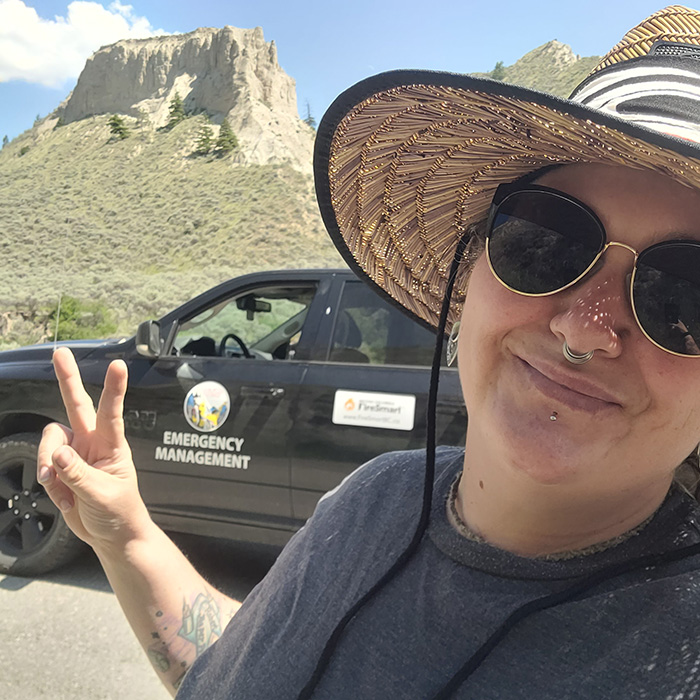
1.Where do you live and what geographical area do you cover? Tk’emlups te Secwepmec Nation in Kamloops BC
2. How long have you been an LFR? 3 years
3. What made you decide that you wanted to be an LFR and support homeowners and neighbourhoods on how to become FireSmart? My previous experiences as a wildland and mitigation specialist as a “just in” firefighter on the nations exposed me to the devastating effects of wildfire. I felt like education and prevention was a great way to make a positive impact.
4. What would you say are your 2 biggest challenges as an LFR ? 1) Connecting with such a large nation. 2) Bringing the nation together to engage and to prepare and educate.
5. What are some of your successes with the FireSmart program? Most of my successes are a result of the 200 home ignition assessments and bringing the fire hazards forward to the community.
6. What has been your favourite project/event you have done with your local FireSmart Program? From a Nation perspective, it has been amazing to watch all the meaningful engaging with the people and the interest of becoming a recognized firesmart community.
7. What advice would you give to other LFR’s? Be patient and accommodating. Recognize this isn’t going to happen over night and work hard to provide unique solutions to individuals FireSmart situations.
8. What is your favourite of aspect of the FireSmart BC website ? After each assessment, I like to provide a paper copy to every home and educate them with all the paper facts sheets provided from the firesmart den.

1. Where do you live and what geographical area do you cover? I live in the Ashcroft area and mainly focus on the Community of the Ashcroft Indian Band.
2. How long have you been an LFR? I have been an LFR for about 1 year. But, I have been managing the Band’s Fire Mitigation program for about 3 years now.
3. What made you decide that you wanted to be an LFR and support homeowners and neighbourhoods on how to become FireSmart? I have been working for the Ashcroft Indian Band for over 4 years. I started managing the Fire Mitigation and Emergency Readiness and Response Program three years ago. I started out as the FireSmart Champion, and the natural progression was to take on the LFR role as well. Since the 2017 Wildfire our main focus at the Band is Fire Mitigation and doing the best we can to make sure we are better prepared if another wildfire strikes in our area again.
4. What would you say are your 2 biggest challenges as an LFR? One is definitely getting people on board with the fire mitigation program, making sure that homes, decks and yards are “Firesmart” and free of flammable fuels and debris.
5. What are some of your successes with the FireSmart program? We have an amazing crew that works tirelessly from early Spring to late Fall. We have multiple community clean ups, our staff are constantly weed-eating, mowing, removing debris, flammable fuels and maintaining fire guards. We’ve started our tree replacement program, removing flammable coniferous trees around homes and replacing them with the nice green leafy deciduous trees. Since the 2017 wildfire, all of our new builds use Firesmart materials, Hardy Board siding and metal roofs. We are also working on a burn plan to conduct cultural and prescribed burns in the Spring and Fall.
6. What has been your favourite project/event you have done with your local FireSmart Program? One of my favourite projects has been the regreening of the community. We have been working hard to replace the trees lost in the 2017 wildfire, while providing privacy for homes and shade for our community members, as well as beautifying the landscape.
7. What is your favourite of aspect of the FireSmart BC website ? I like how easily accessible handouts are.
1. Where do you live and what geographical area do you cover? Nelson, I cover the entire Regional District of Central Kootenay
2. How long have you been an LFR? 4 years
3. What made you decide that you wanted to be an LFR and support homeowners and neighbourhoods on how to become FireSmart? My previous experiences as a structural and wildland firefighter exposed me to the devastating effects of wildfire. I felt like education and prevention was a great way to make a positive impact on our communities.
4. What would you say are your 2 biggest challenges as an LFR ? 1) Connecting with such a large geographic area. 2) The reactive nature of people, it is sometimes difficult to keep momentum and engage in slow fire years, while in busy years, everyone wants FireSmart when their home is in danger.
5. What are some of your successes with the FireSmart program? Most of my successes are a result of the amazing team of 6 Wildfire Mitigation Specialists I help manage here at the RDCK. Together, we complete 300 HPP assessments, work with over 30 Neighbourhood Recognition Programs and process over 100 rebates each year.
6. What has been your favourite project/event you have done with your local FireSmart Program? From a regional perspective, it has been amazing to watch all the meaningful change taking place. All the homeowners through the rebate program are truly reducing their risk to wildfire. While Neighbourhood programs have now been established for long enough that they are in a much better situation than 4 years ago. One Neighbourhood in Castlegar finally received permission from the strata council to move forward with their full FireSmart plan and they removed over 100 cedar hedges from within the non-combustible zones last year. This was a 4-5 year process of working very closely with the neighbourhood.
7. What advice would you give to other LFR’s? Be patient and accommodating. Recognize this isn’t going to happen over night and work hard to provide unique solutions to individuals FireSmart situations.
8. What is your favourite of aspect of the FireSmart BC website ? After each assessment, we like to provide a link to the digital copies of the various guides and manuals found on the website. Very helpful.
1. Where do you live and what geographical area do you cover? I live in Peachland and cover the District of Peachland while occasionally partnering with West Kelowna for events.
2. How long have you been an LFR? I have been an LFR since 2021.
3. What made you decide that you wanted to be an LFR and support homeowners and neighbourhoods on how to become FireSmart?Peachland Fire and Rescue Service was looking to expand our FireSmart program. They hoped to have an experienced paid-on-call member do the LFR training and help with the program. I figured since I had been on a few wildfire deployments for structure protection, it would be a great chance to bring my experiences with wildfire to help my community become more resilient and expand my knowledge of FireSmart. It has been an amazing opportunity to solidify some knowledge and learn so much more while helping the residents of my community.
4. What would you say are your 2 biggest challenges as an LFR ? I tend to struggle with helping homeowners plan FireSmart landscaping that works with their property and personal preference while being affordable. The other struggle I face is with homes that are on a slope that only junipers are holding. It can be difficult to come up with a plan for maintaining slope stability while trying to promote FireSmart principles.
5. What are some of your successes with the FireSmart program? I would say getting and implementing a successful rebate program. It has been amazing seeing the increased engagement from community members. We also have an overwhelming interest in requests for home hazard ignition assessments that we promoted through educational programs. And an oversubscribed neighbourhood chipping days that residents help plan and execute themselves.
6. What has been your favourite project/event you have done with your local FireSmart Program? Last year I worked with a neighbourhood that wanted to be a part of the neighbourhood recondition program. The event they held was a work day where they filled a 40-yard bin with coniferous debris. They paired this event with a FireSmart info booth to include the residents who were unable to help with the manual labour. After hours of work, they held a barbecue where they thanked all the residents who volunteered as well as the firefighters who came out to help.
7. What advice would you give to other LFR’s? My advice would have to be to ask the homeowner what their primary concern regarding their property and wildfire is. I have found that usually, they are worried about the forest nearby, the mountain above, or their neighbour’s property. By addressing their concerns first I have found that afterwards the homeowner can feel at ease and be more receptive to the recommendations regarding their home. Rather than thinking about their concerns the whole assessment and not being fully present.
8. What is your favourite of aspect of the FireSmart BC website ? My favourite part of the website would have to be the FireSmart BC Landscaping Hub. It is a great tool that allows homeowners to make informed decisions with their landscaping to help it become more wildfire resilient.
1. Where do you live and what geographical area do you cover? I live in Lillooet. Most of my work occurs in Lillooet, the Fraser Canyon, and the Squamish-Lillooet Regional District.
2. How long have you been an LFR? Since 2017.
3. What made you decide that you wanted to be an LFR and support homeowners and neighbourhoods on how to become FireSmart? My employer at the time needed an LFR to get a rebate program going so I attended a training session in Kamloops. I learned a lot about how houses burn that I hadn’t known before, and found the information really useful for my own house, so I’m glad to be able to share this information with my community. The LFR work has been especially rewarding during the past few years when my community was heavily impacted by wildfires. FireSmart work helps us feel more secure and in control when there are wildfires at the doorstep.
4. What would you say are your 2 biggest challenges as a LFR? It can be challenging to make recommendations that balance FireSmart principles with homeowner’s needs for privacy, shade, water availability, habitat, etc. Another challenge is that as a forest technologist I don’t have a background in some components of the FireSmart assessments such as landscaping, home construction and structural firefighting.
5. What are some of your successes with the FireSmart program? In 2021/22 I worked on a project with the District of Lillooet and Squamish-Lillooet Regional District where we offered free labourers and arborists to seniors for up to 2 days per property. It was amazing to see some of the property transformations and how much more secure the homeowners felt after the work was done. The program really helped reduce the barriers that a lot of people face with FireSmart, such as financial capacity, physical ability and access to professionals on remote properties.
6. What has been your favourite project/event you have done with your local FireSmart Program? I helped organize a community cleanup day at the Enchanted Forest at Gun Lake. About 20 of us got together and thinned out the understory, pruned trees and stacked burn piles. It was pretty fun to find bug sculptures, gnome houses and random enchanted scenes as we worked.
7. What advice would you give to other LFR’s? FireSmart home assessments can be intimidating for some homeowners because they think they’ll have to clearcut everything. It helps to ask them what their goals/values are, tell them about the wildfire risks on their properties, and make recommendations that work with their vision for the property.
8. What is your favourite of aspect of the FireSmart BC website? The research section is really helpful and makes it easy to stay updated.
1. Where do you live and what geographical area do you cover? I reside in the City of Penticton and cover this area as well!
2. How long have you been an LFR? I completed my LFR training in May of 2021.
3. What made you decide that you wanted to be an LFR and support homeowners and neighbourhoods on how to become FireSmart? I had started my new position as the FireSmart Team Lead for the City of Penticton’s FireSmart Program. The LFR training became available, and this was a great opportunity to start hunkering down on FireSmart basics. Now that I have this knowledge, I want to continue to share this knowledge with residents in the City of Penticton. Penticton is located in a wildfire-prone area, and I want all homeowners to know what they can do to become more resilient to wildfire.
4. What would you say are your 2 biggest challenges as a LFR? 1. Creating a change in behaviour once FireSmart assessments have been completed. Many residents know their hazards after receiving a FireSmart Home Assessment, but struggle to make the change. 2. Supporting an older demographic through the Neighbourhood Recognition Program which must be applied on through the portal now!
5. What are some of your successes with the FireSmart program? More and more people are recognizing FireSmart and the FireSmart team, and more people are having a better understanding of the FireSmart principles. Especially kids. They have been like sponges to the FireSmart educational material. It has also been great to see communities/neighbourhoods come together for the first time because of FireSmart. Through the FCNRP neighbours are meeting neighbours for the first time, it is awesome to see that sense of community made possible through this program.
6. What has been your favourite project/event you have done with your local FireSmart Program? My favourite event this far was a FireSmart information session specific to landscaping. This information session was for a Gardening group that met monthly and they were curious as to what FireSmart landscaping really was. After this event, they all went back to their neighbourhoods and shared what they had learned. Seeing how all of this information has different avenues to disseminate into the community has been neat!
7. What advice would you give to other LFR’s? Take the opportunity to learn everything and anything that relates to FireSmart! There is so much information out there, and homeowners always seem to think of the most bizarre questions. So, the more information you can have in your toolkit may benefit you somewhere down the road. Having more knowledge on FireSmart also allows for LFRs to have a better overall view of the FireSmart program.
8. What is your favourite of aspect of the FireSmart BC website? The FireSmart BC Landscaping Hub! This is a great resource for people looking to complete some FireSmart landscaping. I like how it breaks down the plants into trees, shrubs, groundcover, etc. I am also excited to see the development of the FireSmart Community Forum. This will be an excellent resource for LFRs and FireSmart Coordinators.
1.Where do you live and what geographical area do you cover?
Central interior of the province near Bouchie Lake and cover Quesnel and the North Cariboo
2. How long have you been an LFR?
4 years
3. What made you decide that you wanted to be an LFR and support homeowners and neighbourhoods on how to become FireSmart?
I’ve worked in the Forest industry for > 30 years as an RPF and after I retired the opportunity came along to share the fireSmart concepts with the community so I jumped at it as I believe in the concepts and seen the results first hand, so sharing the information is a natural fit for me.
4. What would you say are your 2 biggest challenges as an LFR?
A. Getting the message out in a variety of ways to as many people as possible
B. Getting municipalities and larger businesses to see the benefits of reducing the risk around their infrastructure and utilize firesmart practices in new construction
5. What are some of your successes with the FireSmart program?
Working with a local church where we worked on a neighbourhood plan as they proved a venue for meetings and helped spread the message amongst their parishioners.
6. What has been your favourite project/event you have done with your local FireSmart Program?
Working on a neighbourhood plan with community members and seeing the growth in the concepts and their pride in their efforts as they spread the message to their neighbours.
7. What advice would you give to other LFR’s?
Always look at any and all opportunities to spread the message, I find it is like a pair of glasses and once you put them on, you can never take them off.
8. What is your favourite aspect of the FireSmart BC website?
The wide variety of resources that are at your fingertips and the support that is provided when necessary.
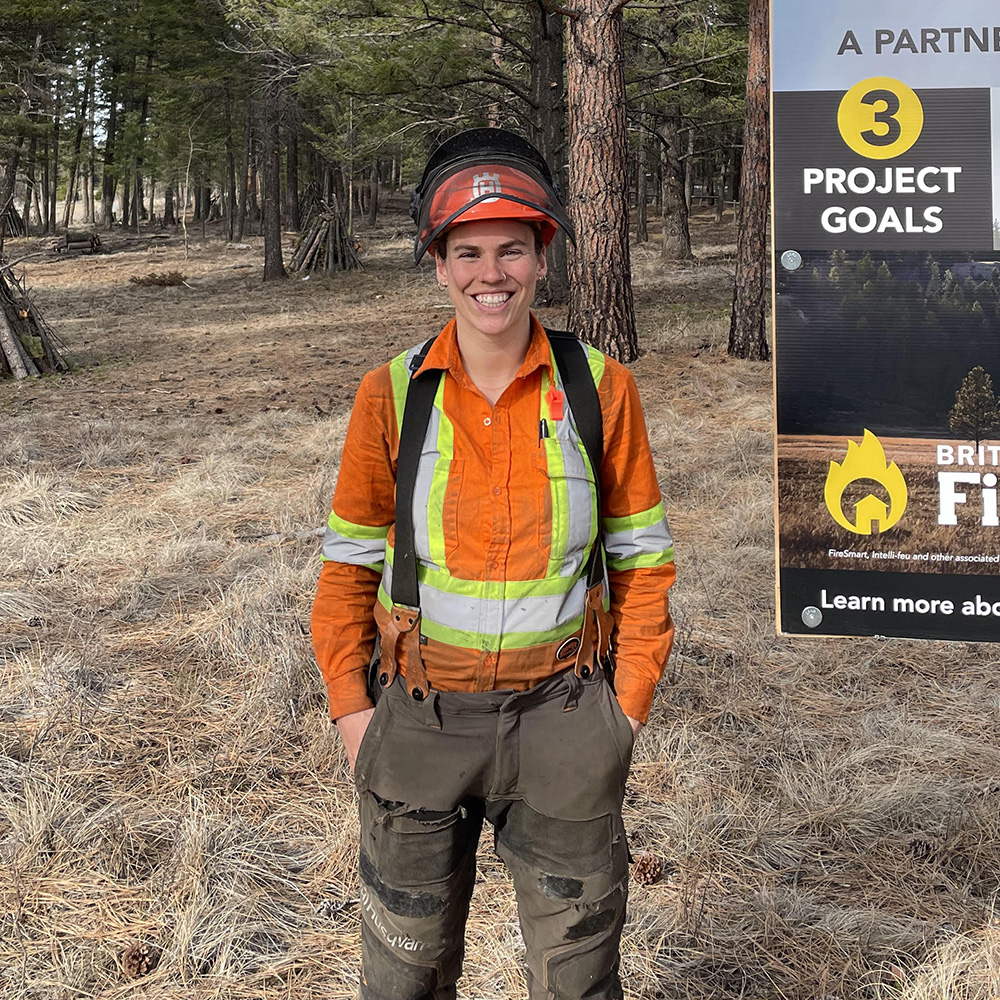
1. Where do you live and what geographical area do you cover? I live in Kimberley, BC and I primarily cover the City of Cranbrook and RDEK Electoral Areas C and E, however, can provide support to residents throughout the Regional District of East Kootenay.
2. How long have you been an LFR? I took the LFR course in winter 2020 but didn’t work as an LFR until spring 2022.
3. What made you decide that you wanted to be an LFR and support homeowners and neighbourhoods on how to become FireSmart? My experiences working on a Unit Crew with BC Wildfire Service and my understanding of the changing reality of wildfires in the WUI. When I moved on from the wildfire service, I wanted to continue with work related to wildfire, and wanted to be able to share my knowledge and experiences to motivate change.
4. What would you say are your 2 biggest challenges as an LFR? Finding individuals willing to commit their time and energy to acting as a community champion. Engaging with “nay-sayers” in communities.
5. What are some of your successes with the FireSmart program Working with champions who start off overwhelmed by the FCNRP process, supporting them and simplifying the process for them, and helping them be successful, [and] finding new engagement opportunities.
6. What has been your favourite project/event you have done with your local FireSmart Program? I really enjoy giving presentations to community groups and schools! This year I gave presentations to a Cubs group, summer camps, Grade 3 classes, and two branches of the Rotary Club.
7. What advice would you give to other LFR’s? Meet people where they are at! Not everyone can commit to making expensive home retrofits or participating in the FCNRP. Help them find the components of your program that are accessible to them and will make an impact for their home.
8. What is your favourite of aspect of the FireSmart BC website? The amount of valuable information! It feels easy to get people connected with a meaningful resource hub by sending them to the FS BC website.
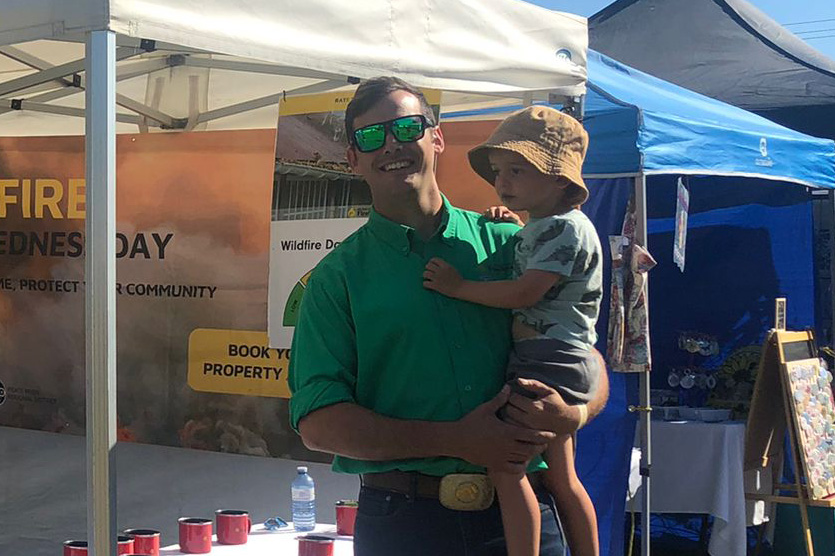
1. Where do you live and what geographical area do you cover? I live in Fort St John, and our program covers the Peace River Regional District, which is the largest regional district at 119,200 km2.
2. How long have you been an LFR? I’ve been an LFR for 2 years.
3. What made you decide that you wanted to be an LFR and support homeowners and neighbourhoods on how to become FireSmart?Working on wildfires for 14 seasons between Canada and Australia, I have seen firsthand how being proactive and managing fuels can keep communities, homeowners and firefighters safe. The lightbulb moment for me was in 2017 when I was scouting a line to construct a dozer guard behind homes, I came across a property which had lamas, sheep and goats. They had grazed the understory so well that we didn’t need to construct a guard at all. The portion of the fire that had been managed by the animals required almost no firefighting. I love getting the opportunity to empower homeowners to manage their own wildfire risk. FireSmart is literally a smarter way to fight fire!
4. What would you say are your 2 biggest challenges as an LFR ? In our Peace Region, the distances can be a challenge. It’s normal to drive 2-4 hours to do an event or assessment. Last year we drove the equivalent of across Canada and back delivering the program. We have improved at scheduling our assessments and events so that we get the most out of our trips.
Finding champions and volunteers can also be a challenge. With the season being so short, there are only so many snow-free weekends in a year and people’s time is so valuable to them. We have found that existing societies and associations are a great place to find proactive people that care about the community.
5. What are some of your successes with the FireSmart program? Each year we have completed 100 property assessments. We had our first recognized neighborhood last year in One Island Lake, and we are expecting to add a couple more this year. We have also been assessing and mitigating critical infrastructure in the region with 10 sites mitigated this year.
6. What has been your favourite project/event you have done with your local FireSmart Program? Our Wildland Urban Interface training event in the North Peace was really rewarding. We had three local fire departments, along with BCWS crews working on a “mock” fire at the Tse’K’wa Heritage Society archaeological site. The event focused on developing interagency relationships while sharing tactics, knowledge and tools for the WUI environment. A fuel free that was constructed as part of the event is now being developed as an access trail for visitors with limited mobility. The heritage society gave the firefighters a tour of the cave at the end of the event. It amazing to learn about the Dunne-za and the cultural heritage of the area. I was really excited that the event turned out to be advantageous to all parties!
7. What advice would you give to other LFR’s? I would say get outside! Everything good in the program seems to come from being outside, shaking hands and networking. It’s easy for people to scroll past a Facebook post or ignore an email, but when you meet people face to face, you can have a lasting impact and develop relationships that can really move the program ahead. It does take time.
My favorite quote is: “A journey of a thousand miles begins with a single step” Lao Tzu
8. What is your favourite of aspect of the FireSmart BC website ?
I would say hands down the LFR of the Month. Lol
I use the resource in the LFR den all the time. It’s nice to have on hand, and you know that it’s always up to date.
9. Craig – you shared with FireSmart BC how you utilized the 2022 FireSmart BC Spring Summer Campaign – what did you do? How did it go? I really liked FireSmartBC’s campaign this year. I thought the ads were fun and gave people real feedback on how their actions affect their fire risk, so we decided to take the idea and run with it.
For our preparedness days, we built four fire danger rating signs and had them attached to posters showing properties with different wildfire hazards and others with mitigated hazards. All the kids that attended our events had a passport that got stamped when they moved the needle on the signs to reflect the hazard in the poster. Once they had their four stamps (spelling FIRE) they received an ice cream from the Ember freezer. It was really fun and engaging for the kids and helped us reach a lot of parents.
Know someone doing great FireSmart work? Perfect! Nominate them today by using our submission form, or by sending us an email to Support@FireSmartBC.ca with their name and why you’d like to nominate them.